
The Enduring Appeal of the Giant Dog Statue
From loyal companions curled at our feet to heroic working dogs celebrated in history, dogs have always held a special place in human culture. They embody loyalty, protection, joy, and unconditional love. So it’s no surprise that artists, cities, and communities have chosen to immortalize them in monumental form—through the giant dog statue. These statues aren’t just oversized tributes to man’s best friend. They serve as public art, tourist attractions, cultural landmarks, and heartfelt memorials that connect people with their communities and with their own cherished pets. Whether towering in a park, standing guard at a museum, or greeting travelers on the roadside, giant dog statues capture the essence of humanity’s bond with canines in a way that is both playful and profound. This article explores why dogs are so frequently chosen for monumental art, how these giant statues impact communities, famous examples around the world, the artistry behind their design, the emotional experience of encountering one, and even how such monumental works are fabricated.
Why Dogs Inspire Monumental Art
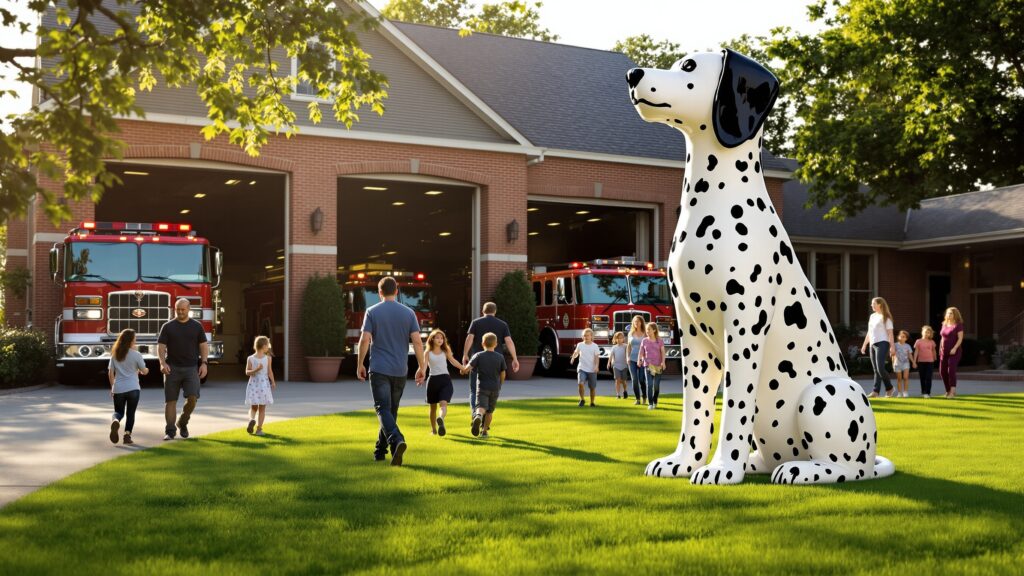
Dogs are not only beloved pets—they are symbols. Throughout history, they have represented loyalty, courage, guidance, and guardianship. Ancient Egyptians depicted dogs as hunters and companions, while Greek mythology associated them with watchfulness and the underworld’s guardians. In modern times, they are beloved family members, service animals, and cultural icons. Creating a giant dog statue elevates this symbolism into monumental form. A bronze retriever towering over a city square doesn’t just celebrate an animal; it celebrates loyalty and friendship. A colossal shepherd outside a police academy reminds visitors of canine bravery in service. A giant Dalmatian in front of a firehouse symbolizes protection and vigilance. These statues remind us of the multifaceted roles dogs play in human life: protectors, helpers, guides, companions, and friends.
Famous Examples of Giant Dog Statues
Around the world, giant dog statues have captured hearts and headlines.
In Hachikō Square in Tokyo, Japan, a statue of the famously loyal Akita Hachikō draws millions of visitors each year. Though not enormous, its cultural impact is massive, and many communities have built larger-scale dog statues inspired by that same theme of loyalty.
In the United States, roadside Americana includes quirky fiberglass dogs standing outside gas stations, diners, and motels. Some stretch over 20 feet tall, designed to catch the eyes of passing motorists. These statues have become beloved landmarks, drawing tourists eager to pose with oversized versions of man’s best friend.
In Scotland, the statue of Greyfriars Bobby, a Skye Terrier who famously stayed by his master’s grave for years, became a symbol of devotion. Modern reinterpretations have produced much larger versions for festivals and tourism campaigns.
And in New York City, a giant spotted Dalmatian statue playfully balancing a yellow taxi on its nose stands outside a children’s hospital, blending whimsy with inspiration.
Each example demonstrates how giant dog statues embody not just animals, but stories—stories of loyalty, culture, humor, and joy.
Giant Dog Statues as Community Icons
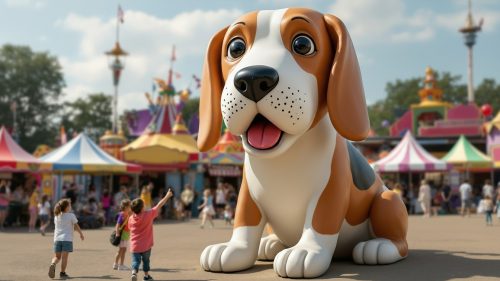
Giant dog statues often transcend art to become symbols of community identity. Small towns and large cities alike adopt them as mascots, emblems, or rallying points. Placed in public parks, they become popular gathering spots. Tourists snap photos, children climb around their bases, and locals refer to them as meeting points. Outside institutions like libraries, universities, or hospitals, they serve as metaphors for guidance, loyalty, or care. They also play economic roles. A roadside business with a 15-foot beagle outside is far more likely to attract passing visitors. A quirky landmark generates publicity, draws travelers off highways, and gives communities a memorable “hook” in regional tourism. Most importantly, these statues foster pride. They reflect values—loyalty, friendship, service—that communities wish to celebrate. They remind people of the role dogs play in daily life, offering a visual love letter to man’s best friend.
Styles of Giant Dog Statues
One of the reasons giant dog statues resonate so strongly is the variety of artistic styles used to bring them to life. Some statues aim for hyper-realism, capturing every wrinkle of skin, every ripple of muscle, and every detail of fur. These statues feel almost alive, as though the dog might leap off its pedestal at any moment. Others take a whimsical or cartoonish approach, exaggerating the dog’s features—oversized eyes, exaggerated ears, or playful poses. These statues invite joy and laughter, particularly when placed in spaces designed for children or families. Some are stylized or abstract, using clean lines, geometric shapes, or polished metallic finishes to transform the dog into a modern art statement. These statues might not look like any one breed, but instead suggest the essence of canine companionship in an artistic way. Then there are statues inspired by specific breeds or real dogs. Communities often commission statues of dogs tied to local history—sled dogs in Alaska, sheepdogs in rural areas, or Dalmatians in connection with firehouses. These statues combine realism with heritage, grounding the art in cultural storytelling.
The Emotional Impact of Encountering a Giant Dog Statue
Encountering a giant dog statue is often an emotional experience. For children, it’s pure magic—seeing a beloved animal transformed into something so much larger than life. They run around the statue, pat its paws, and pose for photos. For adults, the experience often evokes nostalgia. A statue might remind them of their own childhood dog, a service animal they respect, or simply the bond they share with their current pet. There’s an immediate connection, because nearly everyone has some relationship with dogs. In memorial settings, such statues can evoke reverence. They may honor police dogs, military canines, or loyal pets remembered for their devotion. In whimsical roadside attractions, they inspire laughter and curiosity. In every case, they generate feeling—something many works of public art strive for but don’t always achieve.
The Role of Dogs in Roadside Americana
Much like giant cows, dinosaurs, and chickens, giant dog statues found their place in roadside Americana during the boom of car culture in the mid-20th century. Businesses competed to catch the attention of passing motorists, and oversized fiberglass animals became the perfect solution.
A giant hound outside a hot dog stand, a towering Dalmatian outside a fire truck museum, or a colossal beagle outside a pet store—these quirky statues turned businesses into landmarks. Today, many of these vintage statues are cherished as nostalgic icons, celebrated by travelers who seek out unusual roadside attractions. Giant dog statues continue to thrive in this tradition. They serve not just as marketing tools but also as cultural touchstones, tying communities to the fun, playful spirit of American road trips.
How a Giant Dog Statue is Fabricated
Behind the whimsy and emotion lies serious craftsmanship. Fabricating a giant dog statue requires careful planning, artistry, and engineering.
Concept and Design
The process starts with concept art—sketches, digital renderings, or even small clay maquettes. Artists decide whether the dog will be realistic, stylized, or whimsical. Poses are chosen carefully: sitting, standing guard, lying down, or playfully balanced on its hind legs. Engineers then step in to ensure the design is structurally sound. Even if a statue looks playful, it must withstand decades of weather, wind, and, in some cases, human interaction.
Materials
The choice of materials depends on purpose and budget.
- Fiberglass is one of the most popular materials for roadside and large-scale statues. It’s lightweight, durable, and easy to mold into smooth or detailed shapes.
- Bronze is often chosen for more permanent, artistic installations. It provides durability and a timeless finish, though it is expensive.
- Concrete or Stone are favored for statues that need to feel monumental and immovable. These materials require strong foundations but can last centuries.
- Metal Frameworks with Resin or Coating provide internal strength while allowing for detailed exteriors.
Structural Framework
At the core of most giant dog statues is a steel skeleton or armature. This framework supports the statue’s weight and provides stability. Extended features—such as ears, tails, or raised paws—are reinforced with additional supports to prevent collapse.
Sculpting and Finishing
The outer surface is shaped, molded, or cast, depending on the material. For realism, fur textures and facial features are painstakingly detailed. For whimsical styles, surfaces may be smooth and painted in bright, glossy colors.
Special finishes protect the statue from weathering. Outdoor statues often receive UV-resistant paints and protective sealants to preserve their appearance for decades.
Installation
Transporting and installing a giant statue requires cranes, flatbed trucks, and skilled crews. Some statues are built in sections and assembled on-site. Foundations are reinforced with concrete and steel to prevent tipping or erosion.
Once installed, the statue becomes more than just an artwork—it becomes part of the landscape, a landmark designed to stand tall for generations.
The Future of Giant Dog Statues
As technology advances, so does the potential for innovation in giant dog statues. Interactive features are becoming increasingly popular. Imagine a statue that lights up at night, plays recordings of barks, or uses motion sensors to wag its tail when visitors approach. Augmented reality could add another layer, allowing visitors to scan the statue with their phone to unlock animations or stories about famous dogs. Eco-conscious materials, including recycled plastics and solar-powered lighting, could reflect communities’ sustainability values. We may also see more community-driven projects, where locals collaborate with artists to design statues that reflect specific values or honor beloved dogs from the area. These statues won’t just be landmarks; they’ll be collective creations that strengthen community identity.
Conclusion: A Monument to Loyalty and Joy
The giant dog statue is more than just an oversized pet immortalized in metal, stone, or fiberglass. It is a celebration of loyalty, joy, and the timeless bond between humans and dogs. From roadside Americana to cultural memorials, from whimsical art to solemn tributes, these statues speak to universal feelings of love, devotion, and companionship. To stand before a giant dog statue is to be reminded of the qualities dogs embody—unwavering loyalty, courage in service, and joy in play. It is to feel both humbled and uplifted, to see in monumental form what we experience every day in our homes and hearts.
As long as dogs continue to be humanity’s closest companions, giant dog statues will continue to rise in cities, towns, and attractions around the world. They stand not only as monuments to man’s best friend but as symbols of the qualities we aspire to ourselves: loyalty, love, and the joy of living in the moment.
Check out WhiteClouds’ 3D Statues for more information.
Contact us today to learn more about our 3D services and how we can help you achieve your goals.