
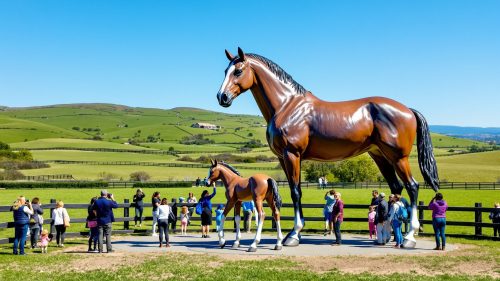
The Majestic Allure of the Giant Horse Statue
Few monuments capture the imagination like a giant horse statue. Towering, muscular, and brimming with elegance, these colossal creations fuse artistry, engineering, and cultural symbolism into a single breathtaking spectacle. Whether perched proudly in a bustling city plaza or nestled in a serene countryside, giant horse statues have long been used to honor history, represent power, and spark awe in all who gaze upon them. In this article, we’ll explore the origins of horse monuments, why they continue to fascinate us, the artistic process behind their creation, and the lasting legacy they leave for generations. Strap in for a ride through history, creativity, and craftsmanship—because this is no ordinary statue. This is the world of the giant horse statue.
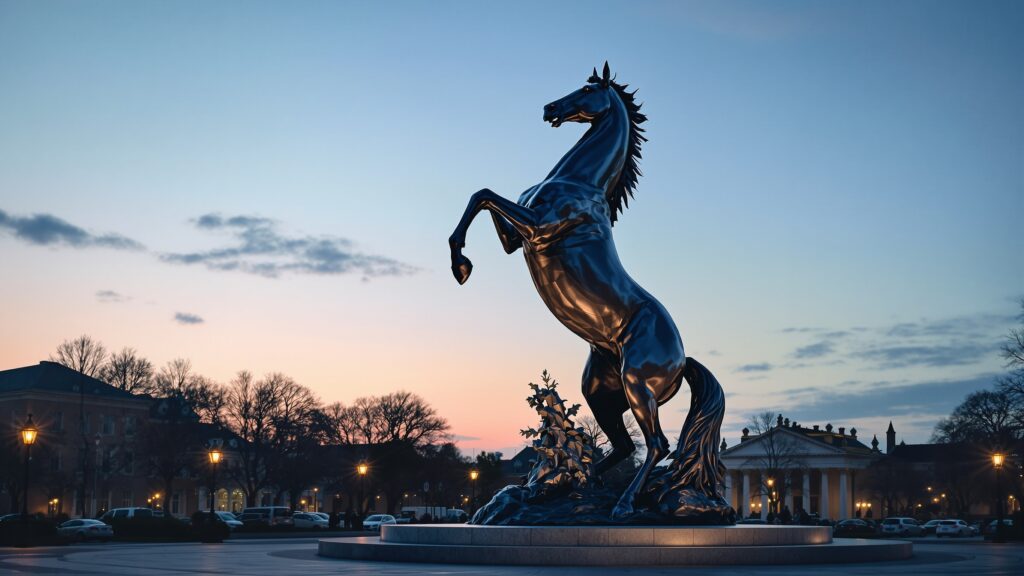
A Legendary Animal in Monumental Form
The horse is one of humanity’s oldest and most meaningful companions. From the dawn of civilization, horses were more than just transportation—they were symbols of strength, loyalty, and progress. Ancient cultures revered them for their speed, stamina, and sheer beauty. Translating such a noble creature into monumental form is not a new concept. The Greeks and Romans sculpted equestrian statues to honor gods, emperors, and military leaders. These works, often cast in bronze or carved from marble, immortalized both rider and horse in dynamic poses that suggested motion and dominance. The horse became not just a representation of an animal, but of entire societies’ values: victory, conquest, freedom, and pride. Today, giant horse statues continue this legacy, reminding us of humanity’s eternal bond with the animal that helped shape civilization.
Iconic Giant Horse Statues Around the World
Giant horse statues are not just artistic feats—they’re cultural landmarks. Some of the most remarkable examples can be found scattered across the globe.
One of the most famous modern examples is the Kelpies in Falkirk, Scotland. Standing 100 feet tall, these two colossal horse-head sculptures rise beside a canal, their steel forms shimmering in the light. They represent the legendary shape-shifting water spirits of Scottish folklore, but also symbolize the nation’s industrial heritage and its reliance on horsepower, both literal and mechanical. In Mongolia, towering equestrian statues honor Genghis Khan, depicting the great conqueror astride his horse. These works aren’t just memorials—they are sources of national pride, connecting modern Mongolians to their formidable history.
Meanwhile, in the United States, proposals and projects for giant horse statues have surfaced in various cities, blending Western cowboy culture with modern artistic ambition. Wherever they are built, these statues capture attention instantly and become landmarks around which stories and memories are built.
Why We’re Fascinated by Giant Horse Statues
So why do giant horse statues capture our imagination in a way that few other monuments can? The answer lies in a mix of psychology, symbolism, and sheer visual drama.
First, scale matters. When you stand beneath a sculpture several stories tall, you feel humbled, small, and inspired all at once. Horses, already majestic at normal size, become godlike when magnified a dozen times over. Their rippling muscles, flowing manes, and dynamic stances command awe.
Second, symbolism is at play. Horses universally represent freedom, vitality, and nobility. Unlike abstract sculptures, a horse is instantly recognizable and emotionally resonant. Even people who have never ridden one feel connected to its spirit.
Finally, there’s the artistry. A giant horse statue isn’t just big—it’s detailed. Every vein, strand of hair, and expression is exaggerated and magnified, forcing us to admire the craftsmanship involved. In a world of fleeting digital experiences, standing before such a creation is a visceral, unforgettable encounter.
Designing the Impossible: The Art of Conceptualization
Before a single piece of steel is cut or a mold is cast, the journey of a giant horse statue begins on paper—or today, on a digital screen. Conceptual artists and sculptors first determine the pose: rearing, galloping, or standing proudly. Each conveys a different story. A rearing horse symbolizes defiance and strength, while a calm, forward-facing pose might represent wisdom and stability.
Scale models, called maquettes, are often crafted in clay or resin. These miniatures allow artists to experiment with balance, proportion, and emotional impact. Engineers also step in early to assess structural integrity. After all, a giant horse must withstand not only its own enormous weight but also wind, weather, and time. The conceptual stage often involves input from local communities, city planners, and cultural historians. Is the statue meant to honor a specific historical figure? Is it a tourist attraction? A public art installation? The answers shape every detail, from materials to finish.
How a Giant Horse Statue Might Be Fabricated
Turning vision into reality requires immense technical expertise. Fabricating a giant horse statue is a multi-step process that combines ancient sculpting traditions with cutting-edge engineering.
- Framework Construction The process usually begins with a steel framework, essentially the skeleton of the statue. This framework ensures stability and defines the basic contours of the horse. For statues reaching dozens of feet, the framework may resemble the trusses of a bridge, with carefully engineered joints and reinforcements.
- Sculpting the Exterior Over the framework, sculptors add layers of material—often fiberglass, bronze, or cast aluminum. Each choice brings trade-offs: bronze offers timeless durability and grandeur, fiberglass allows for lighter construction and flexibility, and steel creates a bold, industrial aesthetic.
- Detailing the Form This is where artistry shines. Sculptors refine muscles, manes, and facial expressions by hand or through 3D scanning and CNC milling. Modern technology allows even microscopic details to be scaled up faithfully, ensuring the final work feels lifelike even at monumental size.
- Assembly and Welding Large statues are often fabricated in sections—sometimes dozens of them—that are later welded or bolted together on-site. This modular approach makes transportation feasible while still allowing for seamless integration during assembly.
- Surface Finishing Finally, the statue is treated with surface finishes. Bronze might be patinated to achieve rich, aged tones. Steel may be polished to reflect sunlight dramatically or treated with weather-resistant coatings. Fiberglass can be painted or textured to mimic natural horsehair.
The result is a structure that is both an artwork and an engineering marvel, ready to withstand decades or even centuries of admiration.
The Role of Technology in Modern Horse Statues
While traditional sculpting methods are still vital, technology has revolutionized statue fabrication. Today, 3D modeling software allows artists to experiment with poses, proportions, and materials long before construction begins. Computer simulations test how wind might affect stability or how sunlight will strike the statue at different times of day.
Robotics and CNC milling machines can carve large-scale components with precision, saving months of manual labor. Drones can even assist in construction, lifting smaller pieces or capturing aerial views during installation. This blending of art and science means that what once seemed impossible—a horse statue rising ten stories high—is now entirely achievable.
The Tourist Magnet Effect
Wherever giant horse statues are built, tourism follows. Visitors flock to marvel at the scale, take photographs, and share their experiences online. A statue can transform an overlooked area into a must-see destination, boosting local economies and creating cultural identity. The Kelpies in Scotland are a perfect example. Before their installation, Falkirk wasn’t a major tourist hub. Today, thousands visit annually, exploring not only the statues but also the surrounding parks, shops, and restaurants. Similarly, proposed projects in other parts of the world promise to generate similar “tourism gravity.” For cities and towns, a giant horse statue isn’t just art—it’s an investment in cultural branding and economic vitality.
Beyond Stone and Steel: The Emotional Impact
While engineering and tourism matter, the true power of a giant horse statue lies in its emotional resonance. Standing beneath one, people feel a mixture of reverence and inspiration. Children gaze upward with wonder, adults contemplate the history and effort behind the work, and artists feel stirred by the scale of human creativity. These statues also serve as gathering points. Communities meet there for festivals, protests, or simple leisure. They become symbols of unity, embodying not just the horse itself but the spirit of the people who commissioned and built it.
Challenges in Building Giant Horse Statues
Of course, creating these monumental works is not without challenges. Funding is a major hurdle, as costs can run into millions of dollars. Public approval is another—some communities resist large-scale art installations, fearing they may clash with local aesthetics or budgets.
Engineering also presents difficulties. Horses are dynamic creatures, and capturing their power in mid-motion requires immense structural ingenuity. A rearing pose, for instance, may place enormous stress on just two legs of the statue, requiring hidden supports or creative design solutions. Weathering is another concern. Statues exposed to decades of rain, snow, wind, and sun must be treated with protective coatings or designed for ongoing maintenance. Despite these obstacles, the results are almost always worth the struggle—testaments to human vision and perseverance.
What the Future Holds
Looking ahead, the future of giant horse statues seems brighter than ever. With advances in sustainable materials and green construction, future monuments may be both environmentally friendly and more affordable. Interactive elements, such as projection mapping or augmented reality, could allow visitors to see the statues “come alive” with movement and color. Imagine standing beneath a towering horse that, at night, transforms into a shimmering light display, telling stories of mythology and history. As technology blends with tradition, these statues will evolve into dynamic, multisensory experiences.
Conclusion: More Than Monuments
At their core, giant horse statues are more than monuments—they are experiences, stories, and symbols carved into the landscape. They remind us of humanity’s deep relationship with the horse, an animal that carried us into new lands, battles, and eras of progress. They also prove that when artistry and engineering combine, there are no limits to what we can build. The next time you stand before a giant horse statue, take a moment to look beyond its towering size. See the centuries of history, the artistry of sculptors, the precision of engineers, and the spirit of communities who dared to dream big. That’s the true magic of these colossal creations: they don’t just represent horses—they represent us.
Check out WhiteClouds’ 3D Statues for more information.
Contact us today to learn more about our 3D services and how we can help you achieve your goals.