
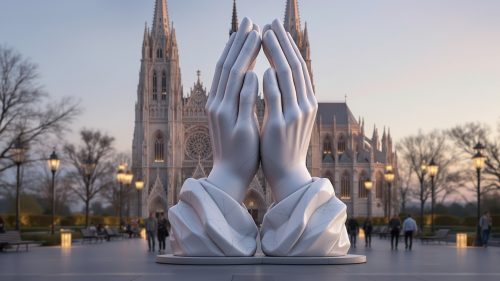
The Giant Hand Statue: A Monument of Scale, Symbolism, and Spectacle
Throughout history, humans have built monuments that embody strength, culture, and imagination. Among the most captivating of these are giant hand statues, colossal sculptures that take something familiar and transform it into something extraordinary. Whether they rise from the earth as if from a myth or reach toward the sky as a symbol of unity, giant hand statues never fail to capture attention and spark curiosity. This article explores the fascinating world of giant hand statues—from their cultural meanings and famous examples to how they might be fabricated in modern times. It is a story of art, engineering, and the power of scale.
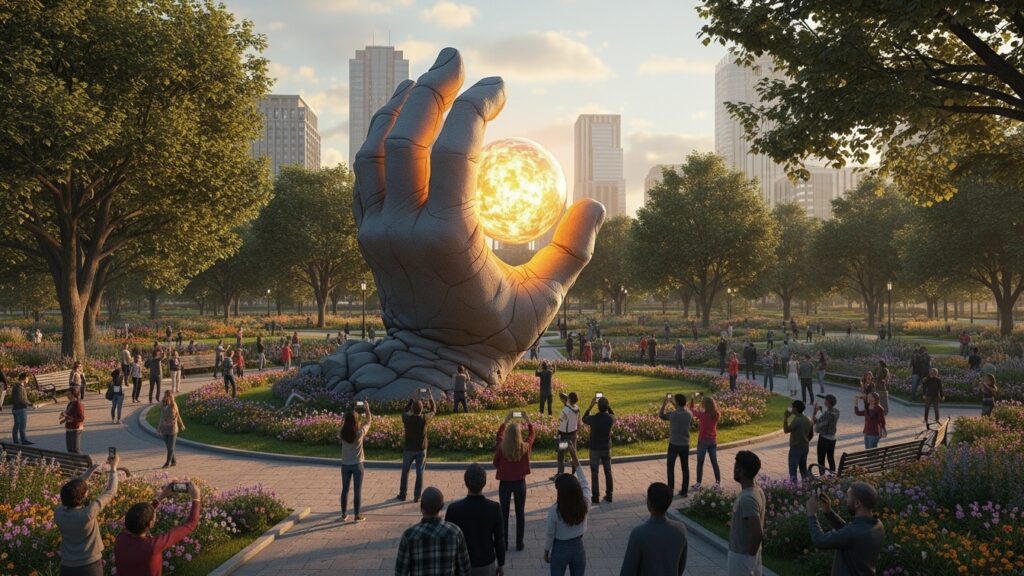
Why Hands? The Symbolism Behind Giant Hand Statues
Hands are among the most expressive parts of the human body. They build, they destroy, they comfort, and they create. From prehistoric cave paintings of handprints to Michelangelo’s “Creation of Adam,” the hand has long symbolized humanity’s connection to power, divinity, and artistry. A giant hand statue magnifies this symbolism. When scaled up to monumental size, a hand becomes more than a body part—it becomes a symbol of strength, guidance, unity, or even mystery. Some statues depict open palms as if offering peace, while others show clenched fists representing determination and resilience. The possibilities for interpretation are endless, which is why artists and architects often choose the hand as a motif for monumental works.
Iconic Giant Hand Statues Around the World
Over the decades, artists and sculptors have created hand statues that transcend their physical form and become landmarks. One of the most famous examples is the “Hand of the Desert” (La Mano del Desierto) in Chile’s Atacama Desert. This colossal sculpture, created by artist Mario Irarrázabal in 1992, rises eerily from the sand, its fingers reaching skyward. Is it a symbol of human fragility in the face of nature’s vastness, or a cry for help echoing from the earth itself? Visitors from around the world travel miles into the desert just to witness this surreal landmark.
Another powerful example is the “Giant Hands of Venice”, unveiled in 2017. Emerging from the Grand Canal, two monumental hands appear to hold up a historic building, symbolizing both humanity’s power to support and the urgent need to protect the city from rising waters. The installation was not just visually stunning but also deeply thought-provoking. Other hand statues, from Asia to Europe, vary in design and symbolism. Some are purely artistic expressions, while others carry political or spiritual messages. Regardless of location, these statues share one trait: they spark wonder and conversation.
The Emotional Impact of a Giant Hand Statue
There is something profoundly moving about standing beside or beneath a giant hand statue. The familiar shape resonates with everyone—it’s universally recognizable. Yet at such a grand scale, the experience becomes surreal, almost dreamlike. For some, the open hand may feel like a gesture of protection, a guardian watching over the land. For others, it could symbolize humanity’s reach toward something greater, perhaps the divine or the impossible. Children might marvel at its size, while adults reflect on the deeper metaphor it represents. This blend of accessibility and depth is what makes giant hand statues uniquely powerful as works of art.
How a Giant Hand Statue Might Be Fabricated
Creating a giant hand statue is no small feat. It combines the artistry of sculpture with the technical demands of large-scale engineering. Let’s walk through how such a structure might be brought to life.
Conceptual Design
The process begins with sketches and digital 3D modeling. Sculptors work to ensure the proportions of the hand feel natural, even when magnified to monumental size. Every curve of the palm, bend of the knuckles, and detail of the fingernails must be carefully studied.
Material Selection
Materials vary depending on the desired finish and durability. Concrete reinforced with steel is a common choice for outdoor installations, as it withstands weather and erosion. Fiberglass and resin may be used for lighter builds, while bronze or steel creates a bold, metallic aesthetic.
Framework and Structure
Much like a skyscraper, a giant hand statue requires an internal framework. This steel skeleton provides stability, distributing the immense weight of the outer layers. Engineers must account for wind resistance, seismic activity, and long-term wear.
Molding and Surface Detailing
Once the framework is complete, outer panels or molds are applied. For highly detailed statues, sculptors may use clay models to guide the creation of realistic wrinkles, veins, and textures. These details are then scaled up and applied to the larger mold before being cast in the chosen material.
Assembly and Installation
Sections of the statue are often prefabricated in workshops before being transported to the installation site. There, cranes and heavy machinery lift and secure each segment. The finishing touches—such as sanding, painting, or adding weatherproof coatings—are completed on-site.
Lighting and Enhancements
To make the statue truly striking, lighting elements are often added. Spotlights can illuminate the hand at night, while integrated LED strips might accentuate key features. In some cases, fog machines or interactive elements bring the sculpture even closer to life.
Fabricating a giant hand statue requires collaboration between sculptors, engineers, architects, and artisans. The result is a breathtaking blend of creativity and technology.
The Giant Hand Statue as a Tourist Attraction
Like other monumental artworks, giant hand statues draw visitors from around the world. Their unique form makes them perfect backdrops for photography and social media, which further boosts their popularity. Cities that host these sculptures often see tourism increase significantly, as people flock to marvel at something unlike anything else in the landscape. In addition to tourism, such statues can spark community pride. Locals often embrace the artwork as part of their identity, rallying around it as a symbol of their town or city. In this way, a giant hand statue becomes more than just a work of art—it becomes a cultural landmark.
The Artistic Freedom of Hand Designs
Unlike statues of people, animals, or specific characters, the hand allows for greater artistic flexibility. A giant hand statue can be abstract, realistic, minimalist, or surreal. It can emerge from the ground, clutch an object, or reach toward the sky.
Artists can experiment with size, position, and material, knowing that the hand will always be instantly recognizable. This versatility makes the giant hand statue one of the most dynamic forms of monumental art. It can shift in meaning depending on the context—political, cultural, or personal—while still maintaining universal appeal.
Looking Toward the Future of Giant Hand Statues
With modern fabrication techniques and advances in materials, the possibilities for future giant hand statues are endless. Imagine a hand statue embedded with interactive digital screens, responding to human touch with shifting lights. Or a hand that integrates solar panels, symbolizing sustainability while generating energy. As cities increasingly look for ways to stand out and inspire, it’s likely we’ll see more giant hand statues around the world. They offer a perfect blend of spectacle, symbolism, and accessibility—qualities that resonate across cultures.
Final Thoughts: The Power of the Giant Hand
The Giant Hand Statue is more than a sculpture—it is a dialogue between humanity, art, and the environment. It magnifies the familiar into the extraordinary, making us pause and reflect on the meaning of scale, gesture, and symbolism. Whether rising from a desert, holding up a building, or gracing a city plaza, these statues captivate the imagination and remind us of our ability to create awe-inspiring wonders. As long as humans continue to dream and build, giant hand statues will stand as monumental testaments to creativity, strength, and the universal language of art.
Check out WhiteClouds’ 3D Statues for more information.
Contact us today to learn more about our 3D services and how we can help you achieve your goals.