
Giant Coffee Tables: Where Design, Function, and Conversation Meet
Coffee tables are among the most beloved and versatile pieces of furniture in the modern home. They anchor living rooms, serve as surfaces for books and beverages, and provide space for everything from remote controls to family game nights. But what happens when a coffee table is scaled up beyond the ordinary? Enter the world of giant coffee tables—oversized creations that redefine function, design, and the way we interact with our living spaces.
Far from being just “big versions” of a familiar object, giant coffee tables are cultural statements, engineering feats, and conversation starters. They reflect our love of communal spaces, bold design, and the playful spirit of enlarging the everyday into something extraordinary. This article explores the origins, design, cultural significance, and future of giant coffee tables. Whether you are a design enthusiast, a furniture lover, or someone simply curious about oversized trends, you’ll discover why these tables are capturing global attention.
The Origins of the Coffee Table
To appreciate the giant coffee table, it helps to understand how the coffee table itself came into being.
The concept of low tables dates back to ancient cultures. In Japan, traditional chabudai tables sat low to the floor, accommodating meals and tea ceremonies. In Ottoman culture, large trays and low stands were common for serving coffee and socializing. The modern “coffee table” as we know it emerged in Victorian England, when tea culture dominated and furniture makers began designing shorter tables to accompany seating arrangements.
By the mid-20th century, coffee tables became staples of Western living rooms, associated with leisure, hospitality, and style. Designers such as Isamu Noguchi and Charles and Ray Eames elevated the coffee table into a design icon. Today, coffee tables come in countless forms—but scaling them up into giant coffee tables pushes the concept into entirely new territory.
What Makes a Coffee Table “Giant”?
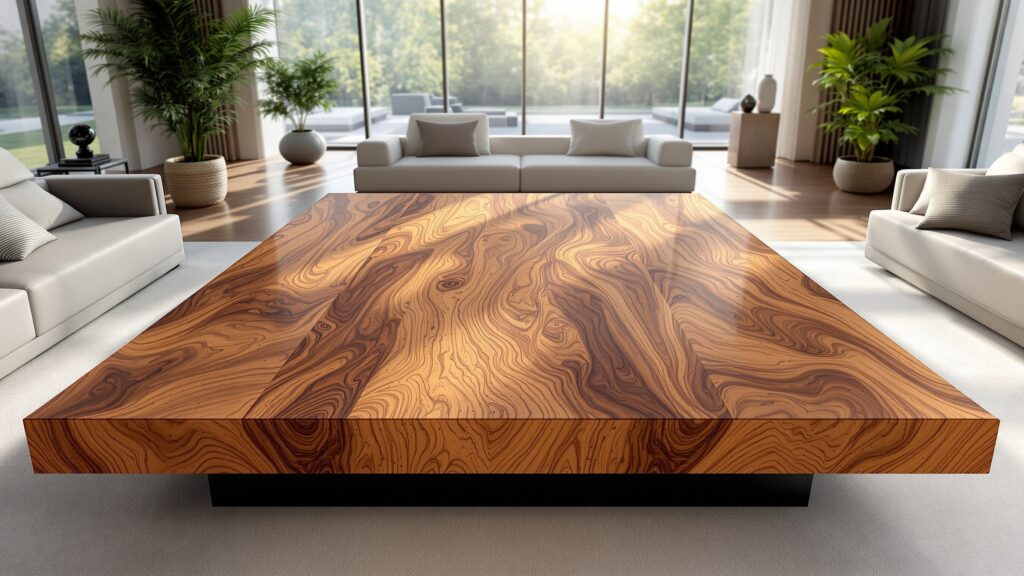
A standard coffee table usually measures between 40 and 60 inches long, 20 to 30 inches wide, and around 16 to 18 inches tall. A giant coffee table defies these proportions, expanding dramatically in length, width, or both. Some are large enough to serve as central platforms in oversized living rooms, while others are so big they become public installations, art pieces, or communal gathering zones.
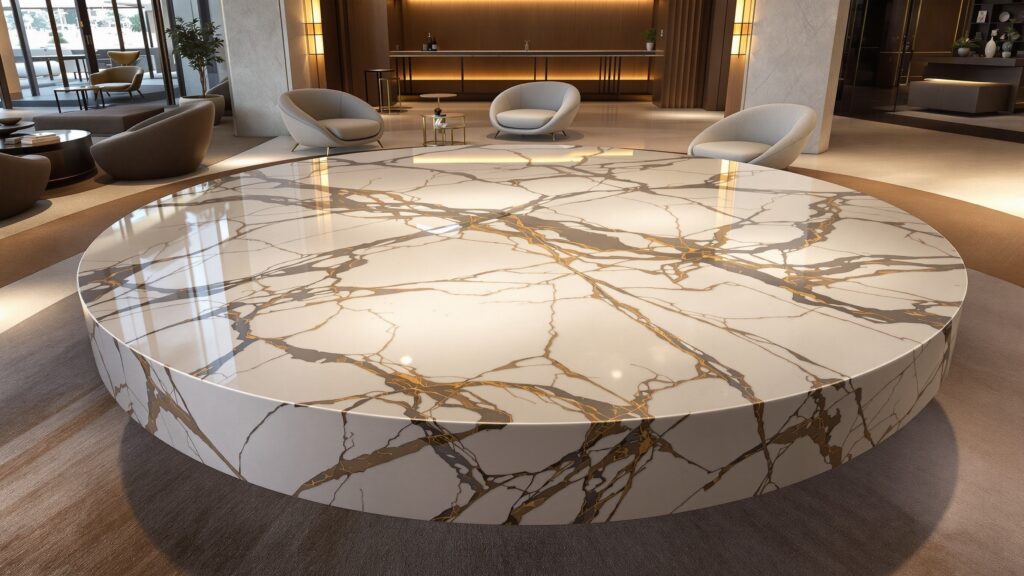
The definition of “giant” depends on context. A coffee table seating twenty people in a hotel lobby might be considered giant compared to residential norms, while public art installations have produced coffee tables stretching dozens of feet. Regardless of size, these tables share a common feature: they reframe the coffee table not as a modest accent, but as the centerpiece of space and interaction.
The Design Challenge of Going Big
Building a giant coffee table is not as simple as enlarging proportions. Designers and engineers face unique challenges when creating these oversized pieces. The structural integrity of a giant coffee table must be carefully considered. A larger surface requires reinforcement to prevent sagging or warping, especially when made from wood or glass. Designers often employ modular construction, hidden supports, or alternative materials like steel frames and engineered composites to maintain durability.
Functionality is another consideration. In a living room, a giant coffee table must still allow for comfortable movement and accessibility. For public installations, safety and stability are paramount. The surface must withstand heavy use, whether from decorative objects, gatherings of people, or even performance art staged atop it. Designers also grapple with aesthetics of scale. A giant coffee table must balance size with elegance, ensuring it looks intentional rather than overwhelming. Some achieve this by emphasizing sleek lines and minimalism, while others embrace playful exaggeration.
Famous Giant Coffee Tables Around the World
Several giant coffee tables have gained recognition for their size, creativity, or cultural impact.
In New York City, some art installations have featured oversized furniture—including coffee tables—that invite visitors to interact as if they were miniatures in a giant’s home. These playful works encourage people to climb, sit, and rethink their relationship to everyday objects. Furniture exhibitions and design fairs around the world have also showcased giant coffee tables as conversation pieces. From Milan’s Salone del Mobile to bespoke hotel lobbies in Dubai, designers use size as a tool to shock, delight, and engage.
Some communities have even attempted world record coffee tables, hosting public gatherings where thousands can sit around an enormous low table for food, drinks, and festivities. These events transform a household staple into a symbol of togetherness on a massive scale.
The Psychology of Scale
Why are we so fascinated by giant versions of everyday objects like coffee tables? The answer lies partly in psychology. When we encounter oversized furniture, our brains immediately sense novelty. It disrupts the familiar, sparking curiosity and wonder. Giant coffee tables also tap into childhood nostalgia, when objects often seemed larger than life. Sitting next to an enormous table can evoke the feeling of being small again, a playful reversal of perspective.
There is also a social element. A giant coffee table naturally becomes a gathering space, inviting multiple people to share food, games, or conversation. It magnifies the social function of an ordinary coffee table, turning it into an arena for connection.
Most importantly, scale commands attention. A giant coffee table makes a bold statement in any environment, whether it’s a hotel lobby, a design fair, or a home with an adventurous sense of style.
Giant Coffee Tables in Popular Culture
Oversized furniture frequently appears in popular culture, from Alice in Wonderland’s surreal adventures to modern theme parks that play with scale. Giant coffee tables often symbolize whimsy, distortion, or the extraordinary hidden within the ordinary.
Advertising has also embraced giant coffee tables as visual metaphors. Brands use oversized furniture to grab attention, exaggerate lifestyle ideals, or emphasize the idea of “living large.” In movies and theater, giant tables and props create dramatic effect, placing characters in exaggerated contexts that highlight vulnerability, comedy, or grandeur. By appearing larger than life, giant coffee tables remind us of the creative power of scale in storytelling.
Function Meets Spectacle
While some giant coffee tables exist purely as spectacle, many serve functional purposes. In large homes, they act as statement pieces that anchor vast living rooms or entertainment areas. In hotels and corporate lobbies, they provide communal surfaces for guests to gather, work, or relax. In outdoor plazas, they transform into social hubs, where coffee becomes a public ritual instead of a private one. Some designers push the boundaries further, creating multi-functional giant coffee tables that double as stages, platforms for art, or even communal dining areas. The versatility of these designs blurs the line between furniture, architecture, and public installation.
Building a Giant Coffee Table: DIY vs. Professional
For design enthusiasts, the idea of building a giant coffee table at home is intriguing. Smaller-scale “giant” tables—perhaps double the size of conventional models—can be achieved with creativity and carpentry skills. Using reclaimed wood, reinforced frames, and durable finishes, DIY builders can craft coffee tables that dominate a living room in the best way possible.
However, when it comes to truly massive installations—whether for events, public spaces, or art exhibits—professional expertise is essential. Engineers, architects, and designers collaborate to ensure structural safety, aesthetic harmony, and practical usability. Large-scale projects often require permits, weight testing, and specialized materials to withstand both time and heavy use.
Sustainability and Oversized Furniture
As with any large-scale furniture, sustainability plays an important role in the design of giant coffee tables.
Eco-conscious designers often use reclaimed materials such as barn wood or recycled metal, giving new life to old resources while reducing waste. Some tables incorporate modular construction, allowing sections to be reused in different contexts. Others highlight sustainable woods such as bamboo or responsibly sourced teak.
Finishes and coatings are also chosen with environmental impact in mind, using low-VOC sealants and natural oils instead of harsh chemicals. The result is oversized furniture that aligns with modern sustainability values without compromising on grandeur.
Giant Coffee Tables and Community
One of the most remarkable aspects of giant coffee tables is their ability to foster community. Unlike a standard-sized table, which usually serves a family or small group, a giant coffee table can host dozens of people simultaneously.
At festivals, giant coffee tables become hubs for conversation, board games, or casual meals. In workplaces, they can transform into collaborative zones where colleagues brainstorm and connect. In public plazas, they encourage strangers to sit side by side, breaking down barriers through the universal language of coffee and companionship. These communal functions reflect the evolving role of furniture in modern life: it is no longer just about utility but also about shaping experiences and relationships.
The Future of Giant Coffee Tables
Looking ahead, the future of giant coffee tables promises even more innovation. Advances in lightweight yet strong materials mean designers can experiment with new shapes and sizes without compromising safety. Interactive technology may also play a role, with tables featuring built-in wireless charging, projection mapping, or interactive LED lighting.
We may also see giant coffee tables designed as hybrid pieces—serving simultaneously as furniture, digital hubs, and artistic installations. Imagine a coffee table large enough to hold an entire community workshop, yet sleek enough to blend into a modern environment. As urban spaces increasingly emphasize shared experiences, giant coffee tables are poised to become not just novelties, but essential elements of how we gather in public and private spaces.
Why Giant Coffee Tables Matter
At first glance, a giant coffee table may seem like a quirky design experiment. But look deeper, and you see something more profound: a symbol of togetherness, creativity, and the human desire to reimagine the ordinary. They challenge us to rethink scale, reminding us that everyday objects can hold extraordinary potential. They bring people together, spark conversation, and anchor spaces with both utility and wonder. Whether in a private living room or a public square, giant coffee tables embody the simple truth that furniture is more than functional—it is cultural, social, and deeply human.
Final Thoughts
The giant coffee table is more than just an oversized surface. It is a cultural phenomenon, a design statement, and a community-builder. It captures attention, sparks joy, and transforms the simple act of gathering around a table into an experience worth remembering.
As design continues to evolve, giant coffee tables will likely appear in more homes, hotels, and public spaces. They remind us of the power of scale, the beauty of design, and the enduring importance of coming together—over coffee, conversation, and connection.
Contact us today to learn more about our 3D services and how we can help you achieve your goals.