
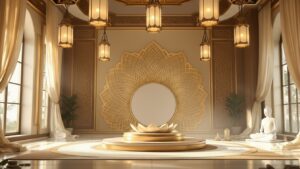
Where Faith, Art, and Craftsmanship Unite in Sacred Design
Throughout history, humans have built special seats not only for kings and queens, but also for the divine. These are the religious or spiritual thrones—seats that symbolize the invisible power of gods, saints, prophets, or cosmic truth itself. Unlike royal thrones, which declare earthly dominance, these sacred chairs speak of transcendence. They embody humility and majesty at once, serving as physical bridges between heaven and earth. In every culture, from the marble temples of Greece to the golden shrines of India, the concept of a throne has represented presence—an anchor for worship, ritual, and awe. The spiritual throne is less about who sits on it and more about what it represents: authority not of men, but of spirit. Today, these thrones remain among the most breathtaking symbols of devotion, artistry, and craftsmanship. They tell stories of faith and philosophy carved in wood, cast in gold, and painted with reverence.
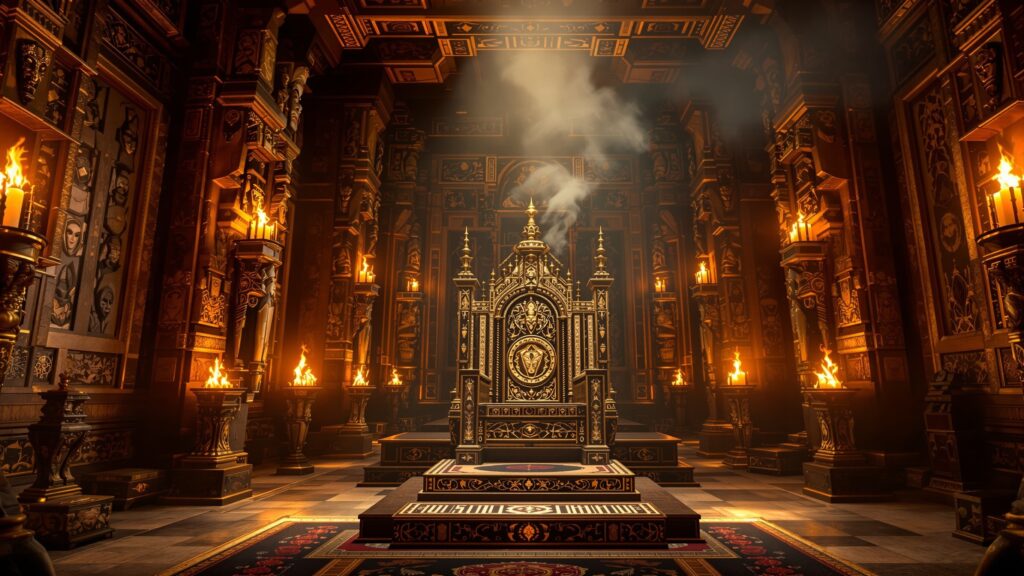
The Origins of the Sacred Seat
Long before the rise of kingdoms and empires, sacred seats were created to honor unseen powers. Ancient priests and shamans built raised platforms or carved stone chairs as resting places for deities during rituals. In some early societies, the throne itself was believed to be the deity’s manifestation—its presence a sign that the divine was listening.
In ancient Egypt, the Pharaoh’s throne was both a royal and spiritual seat, signifying that he ruled as a god among humans. The hieroglyphs carved into the sides of his chair often invoked the favor of the gods, merging temporal rule with eternal blessing.
In Hindu temples, the concept of the simhasana—literally “lion throne”—emerged as a symbol of cosmic order. Deities like Vishnu or Shiva are depicted seated upon intricate thrones guarded by lions or supported by lotus petals, each element representing power, purity, and divine balance.
In Buddhist art, the Buddha’s lotus throne serves a different symbolism: detachment from worldly impurity. The petals beneath him signify enlightenment blossoming from the muddy waters of existence.
And in Christianity, the throne of God—the Throne of Heaven—is described throughout scripture as radiant, eternal, and surrounded by light. It is a symbol of absolute authority, yet it also embodies peace and compassion.
Across continents, the message is consistent: the throne is not just furniture. It’s a declaration of the sacred.
Thrones of Faith Around the World
Every culture has imagined its divine seat differently, shaped by theology, art, and geography.
- In Catholic tradition, the Cathedra—a bishop’s ceremonial throne—symbolizes his teaching authority. The Pope’s throne in St. Peter’s Basilica, known as the Cathedra Petri, is one of the most striking. Designed by Bernini, it encases an ancient wooden chair believed to have been used by St. Peter himself. Gilded angels and rays of light swirl around it, creating a visual metaphor for the Church’s divine mission.
- In Tibetan Buddhism, ornate thrones covered with silk brocade and carved dragons support statues or living masters. The raised platform, often framed by symbolic back panels, represents the elevation of enlightened awareness.
- In Islamic art, while depictions of divine thrones are metaphorical, the concept of Arsh—the Throne of Allah—is an essential element in cosmology. Descriptions emphasize vastness and perfection rather than form, reminding believers that divine presence transcends human imagination.
- In African spiritual traditions, thrones are carved for ancestral spirits and tribal leaders who act as mediators between the visible and invisible worlds. These seats, often made of wood and adorned with beads, ivory, or gold, are consecrated during ceremonies that blend art and invocation.
- In Japanese Shinto rituals, the Takamikura—the Chrysanthemum Throne—is both a political and spiritual seat. During enthronement ceremonies, it is treated as a sacred vessel connecting the emperor to the divine lineage of the sun goddess Amaterasu.
Each culture builds its thrones differently, but the intention is shared: to give tangible form to the intangible.
The Language of Symbols
Every detail of a spiritual throne carries meaning.
In Christian iconography, thrones are surrounded by halos, wings, and spheres of light, representing divine omnipresence. Gold suggests glory and eternal light; marble stands for purity and permanence.
In Hindu and Buddhist art, thrones are often supported by mythic creatures—lions, elephants, or nagas. These guardians symbolize strength, wisdom, and protection of sacred truth. The seat itself is frequently lotus-shaped, a reminder that enlightenment arises from struggle.
In African cosmology, the number of steps leading to a throne may symbolize stages of spiritual initiation. In the Mayan world, jaguar thrones embodied royal divinity, their spotted surfaces representing the starry night sky—a throne beneath the heavens.
Colors also speak their own language: gold for divinity, blue for truth, red for life force, white for peace. Ornamentation isn’t mere decoration; it’s theology made visible.
The Experience of the Throne
To stand before a religious throne is to feel perspective shift. These are not meant to be sat upon by ordinary people. They are visual prayers—anchors for meditation and devotion.
In temples and cathedrals, the throne occupies a sacred axis point, often elevated and illuminated to draw the gaze upward. This verticality mirrors spiritual ascent. The worshiper looks up not just physically, but symbolically, toward enlightenment or divine authority.
Some thrones remain empty during rituals, representing the invisible presence of a god or ancestor. The emptiness itself becomes sacred—a sign of the infinite. Others hold statues or icons, transforming the throne into a stage where belief becomes tangible. Even the air around these thrones feels charged. The combination of light, texture, incense, and silence evokes awe. It’s as if the throne speaks a language of stillness that transcends sound.
The Artistry of Sacred Craft
Building a spiritual throne demands more than technical skill. It requires reverence. Artisans often fast, pray, or purify their tools before beginning, treating the process as an act of devotion rather than labor. Each stage is deliberate. The selection of wood or stone is symbolic. The carving of symbols follows strict iconographic rules passed down for generations. Paints and gilding are applied with ritual precision, often accompanied by chants.
In Nepal, for instance, artists constructing thrones for Buddha statues use exact measurements dictated by sacred geometry. In India, the craftsman building a deity’s simhasana will often begin work only after auspicious rituals, believing the spirit of the god will inhabit the finished form. In cathedrals, sculptors and carpenters collaborated under theological direction. The result was not just furniture—it was architecture condensed into a single seat. The throne became a cathedral within a cathedral. Even modern fabricators who recreate or restore religious thrones for museums and worship spaces approach their work with this mindset. They may use power tools and CNC routers, but the spirit of reverence remains central.
How Religious or Spiritual Thrones Are Fabricated
Fabricating a spiritual throne today is both an artistic and philosophical endeavor. Whether for a temple, a church, or a museum installation, the process merges tradition with technology while honoring meaning at every stage.
Step 1. Concept and Design
Every build begins with a concept guided by faith tradition. Designers consult with clergy, monks, or cultural historians to ensure symbolism aligns with doctrine. Detailed sketches and 3D models establish proportions and motifs—often integrating sacred geometry, iconographic patterns, or scriptural inscriptions.
Step 2. Structure and Material Selection
Material choice depends on the intended setting. For permanent installations, artisans use hardwoods like teak, oak, or mahogany. For portable ceremonial thrones, high-density EPS foam, fiberglass, or lightweight aluminum frameworks offer strength without weight. The frame establishes the throne’s shape—a balance between visual presence and structural integrity. Internal reinforcements ensure stability, especially when ornamentation is heavy.
Step 3. Sculpting and Carving
Carving transforms the throne from blank structure to living symbol. Traditional artisans may hand-carve details such as lotus petals, angels, or mythic creatures. For modern builds, CNC routing or 3D printing can pre-shape complex motifs which are then refined by hand for authenticity. Each curve and line carries intention. The height of the backrest might represent transcendence; the number of tiers could reference spiritual hierarchy.
Step 4. Coating and Finishing
Once sculpted, the surface is sealed and prepared for finish. Polyurea coatings, epoxy, or fiberglass provide durability. Then come the finishes: gilding, metallic paints, or marbleized effects that radiate sacred energy. Artists may apply gold leaf, silver accents, or vibrant pigment patterns inspired by traditional mural art. A spiritual throne’s surface is rarely flat. It shimmers, catches light, and seems to breathe. Light itself is treated as part of the design—a metaphor for divine illumination.
Step 5. Upholstery and Decoration
In some traditions, cushions of silk or velvet are added, embroidered with sacred symbols or mantras. Beads, glass, or gemstones might represent divine attributes—wisdom, compassion, protection. For contemporary reproductions, designers might embed subtle LED lighting to evoke the glow of halos or divine radiance without altering the sacred aesthetic.
Step 6. Consecration or Display
When completed, the throne may undergo a consecration ritual. Holy water, incense, or mantras sanctify it, transforming it from an art object into a vessel of faith. Even replicas for exhibition are often blessed or contextualized with plaques acknowledging their spiritual origin.
Each step reinforces the central truth: a religious throne isn’t just built—it’s birthed.
The Role of Light and Space
Light is the silent partner in every spiritual throne’s design. In cathedrals, sunlight streaming through stained glass lands precisely on the bishop’s chair, symbolizing divine wisdom descending upon human authority. In temples, oil lamps or flickering candles frame the deity’s seat with dancing illumination, suggesting eternal presence. Designers and architects position thrones to capture this interplay between light and belief. Even modern installations use soft uplighting or backlit halos to mimic sacred radiance.
Spatial placement also matters deeply. The throne is rarely centered casually—it occupies the axis mundi, the spiritual center of the room. Steps leading up to it represent ascension; symmetry symbolizes order and balance. A throne in shadow feels mysterious and contemplative. A throne in full light feels triumphant and divine. Artists use both moods to guide the viewer’s spiritual journey.
The Emotional Power of the Sacred Seat
Something profound happens when people encounter a religious throne. Even without understanding its history, they instinctively feel reverence. The combination of scale, craftsmanship, and iconography creates a quiet gravity. In pilgrimages, devotees often touch or bow before thrones, believing them to carry divine energy. In meditation halls, the mere outline of the teacher’s seat focuses the mind. Even in secular galleries, sacred thrones command stillness—a universal recognition of the spiritual impulse. This emotional resonance stems from humanity’s oldest instincts. The throne embodies center, stillness, and presence—the same qualities we seek in prayer or reflection. It’s no wonder these structures endure as symbols of peace, authority, and transcendence.
Modern Interpretations and Artistic Revival
In today’s world, artists and spiritual communities are reimagining the sacred throne for new contexts. Contemporary designers blend traditional craftsmanship with modern aesthetics, creating thrones that honor heritage while engaging current audiences. Some reinterpret ancient symbolism through minimalism—smooth stone seats that emphasize silence over ornamentation. Others combine multiple faith motifs into interfaith thrones symbolizing unity. Artists in glass, resin, and light are experimenting with transparency and reflection to express divine presence without physical weight.
Fabrication studios now build spiritual display thrones for museums, yoga centers, and meditation retreats. These creations emphasize serenity and inclusivity, often incorporating natural textures like bamboo, water features, or integrated lighting that shifts gently with time. Even virtual environments are exploring digital thrones for metaverse temples or meditation apps—3D renderings where users can “visit” spaces of reflection. The throne, it seems, continues to evolve with every generation, adapting to the technologies and philosophies of its age.
The Universal Symbolism of the Throne
Despite differences in style, all spiritual thrones share a unifying purpose: to express the idea that divinity dwells among us. Whether carved in stone or imagined in light, they symbolize stability amid chaos, presence amid absence. A throne reminds us that the sacred has a place—that spirit, like a king or queen, deserves both reverence and recognition. It gives form to faith and transforms architecture into theology. And perhaps most beautifully, it teaches humility. For every throne is ultimately empty without presence. The space invites—not commands—the divine to sit. It’s a gesture of invitation, an act of openness that mirrors prayer itself.
Why Religious Thrones Continue to Inspire
In an age of modern minimalism, it’s remarkable that ornate thrones still hold our fascination. They’re not just historical relics; they’re artistic expressions of humanity’s oldest yearning—to connect with something greater. Their visual drama continues to inspire architects, designers, filmmakers, and even spiritual seekers. They bridge the tangible and the transcendent, reminding us that beauty itself can be a form of worship. And in fabrication studios today, that legacy lives on. Every cut, coat, and carving echoes the ancient craftspeople who once shaped altars and shrines by hand. Every finished throne carries forward the message that belief can take physical form. Whether it glows with candlelight in a temple, stands beneath a stained-glass window, or occupies a quiet corner of a meditation space, the spiritual throne still fulfills its timeless mission: to give the divine somewhere to rest—and us, somewhere to look up to.
Check out WhiteClouds’ 3D Props for more information.
Contact us today to learn more about our 3D services and how we can help you achieve your goals.