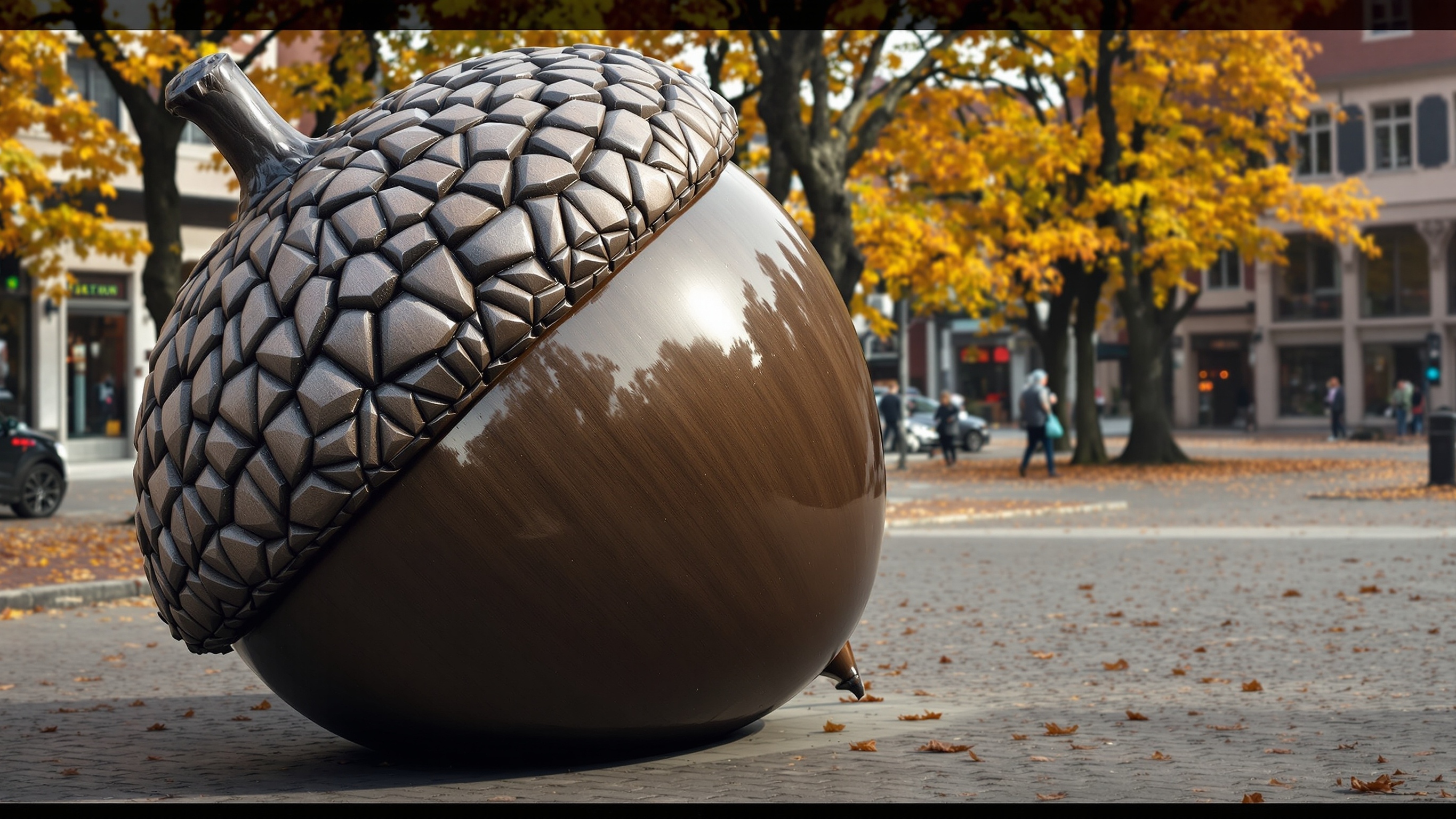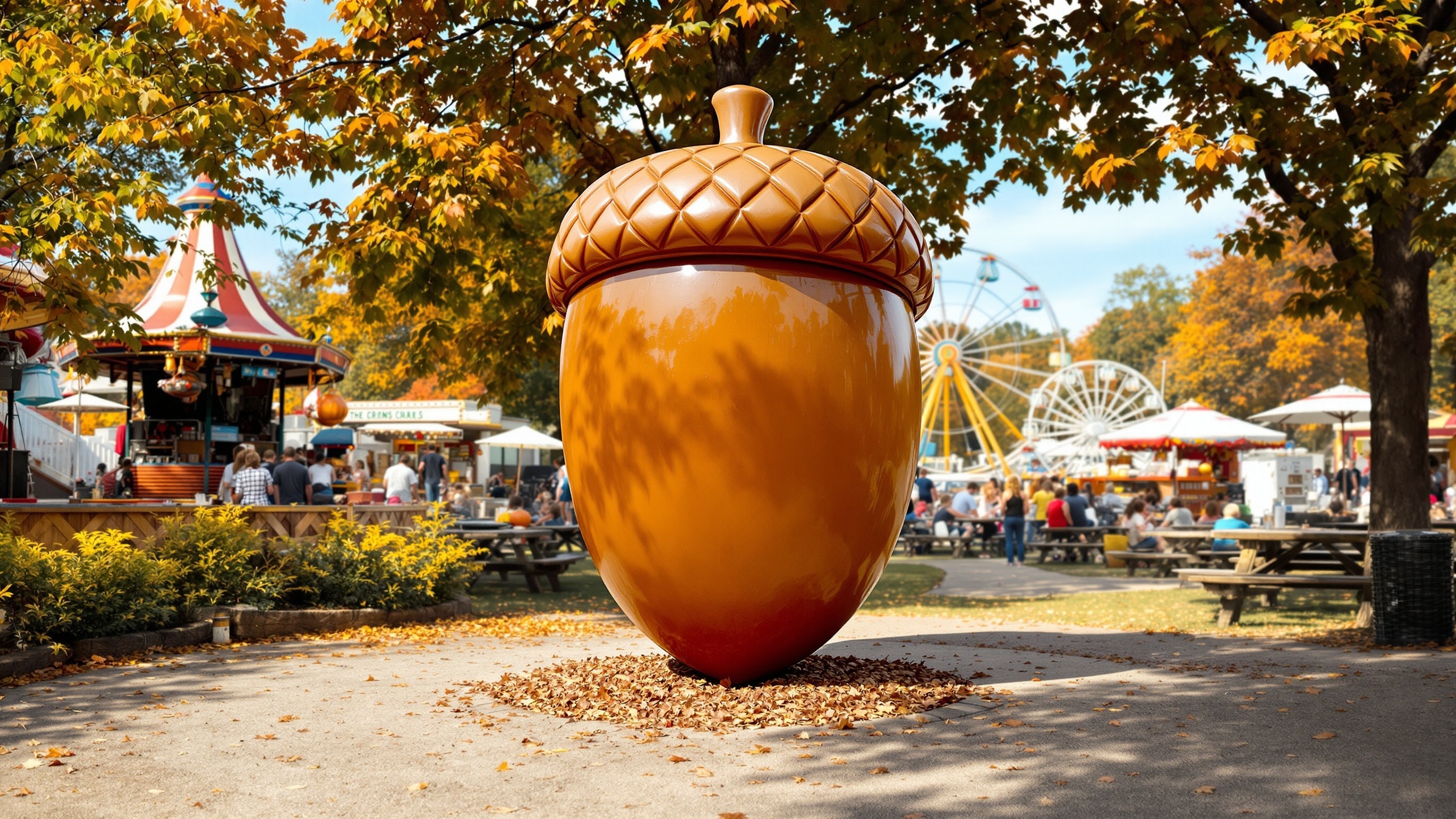
Giant Acorn Statue

Giant Acorn Statue

We Build Custom Giant Acorn Statues

Did you know we make

custom

giant statues?

Giant Acorn Statue harvest fair

The Giant Acorn Statue: A Monument to Whimsy, Nature, and Community

Every town has something that sets it apart—a landmark, a local legend, or an iconic piece of art that becomes woven into its identity. For some, it’s a lighthouse, for others, a quirky roadside attraction. But few things capture the playful imagination and deep cultural symbolism quite like a giant acorn statue. At first glance, an oversized acorn might seem like a simple novelty. Yet, these statues are far more than playful exaggerations of nature. They represent growth, renewal, abundance, and the enduring connection between communities and the natural world. From charming parks to bustling downtowns, giant acorns have popped up as unexpected yet powerful icons of civic pride and cultural storytelling. In this article, we’ll explore the origins of giant acorn statues, their role in community life, the symbolism they carry, and even how one might be fabricated. We’ll also look at famous examples around the world and imagine what it means to live in the shadow of a colossal nut.

Giant Acorn Statue-Town Center

The Acorn as a Symbol of Growth and Potential

Long before giant acorn statues began appearing in public spaces, the acorn itself held profound meaning. It has been celebrated in mythology, literature, and folklore across cultures. The acorn, the seed of the mighty oak, has always symbolized potential and promise. Tiny in size, yet capable of growing into a towering tree that lives for centuries, it embodies resilience, patience, and transformation. Ancient Druids revered oaks and their acorns as sacred, seeing them as keys to wisdom. In Norse mythology, the oak was associated with Thor, the god of thunder, signifying strength and protection. Fast forward to the present day, and the acorn remains a beloved emblem of possibility. It is used in mottos, crests, and literature to represent beginnings that grow into greatness. When translated into the medium of public art, the acorn’s symbolic power magnifies—especially when scaled up to monumental proportions.

Famous Giant Acorn Statues Around the World

Although not as common as statues of historic figures or animals, giant acorns do exist in real life, often becoming unique focal points for their communities.

Raleigh, North Carolina – The Big Acorn

Perhaps the most famous example is in Raleigh, North Carolina, nicknamed the “City of Oaks.” To celebrate its arboreal heritage, the city unveiled a 1,250-pound copper acorn statue in 1992, located in Moore Square Park. Each New Year’s Eve, the “Big Acorn” is ceremoniously lowered at midnight during Raleigh’s annual “First Night” celebration, drawing thousands of residents and visitors. This acorn isn’t just a quirky sculpture—it’s a living symbol of the city’s pride in its oak-lined streets and its welcoming, festive spirit.

Other Notable Acorns

While Raleigh’s acorn has gained national attention, other communities have experimented with similar ideas. Smaller parks and arboretums sometimes feature oversized acorn sculptures carved from wood or cast in bronze. In Germany and parts of Scandinavia, decorative acorn-shaped monuments have appeared in gardens and public squares, highlighting the nut’s symbolic ties to fertility and nature. These examples show how the acorn, humble though it may be, has the capacity to inspire awe when magnified into art.

Why Build a Giant Acorn?

A natural question arises: why devote resources and artistic energy to such an unusual statue? The reasons are as layered as the acorn’s own shell.

A Celebration of Nature

Communities deeply rooted in forestry or agriculture often want to highlight their connection to the land. An acorn statue acts as a tribute to local ecology and a reminder of humanity’s dependence on the cycles of nature.

A Conversation Starter

Quirky roadside attractions—be they giant peanuts, oversized chairs, or massive fruits—spark curiosity. A giant acorn serves as both a tourist draw and a landmark locals can point to with pride.

Symbol of Community Identity

Just as the oak grows from a tiny seed, towns and cities see themselves reflected in the acorn’s symbolism. It reminds residents of their shared growth, resilience, and potential for greatness.

Designing a Giant Acorn Statue

Creating a statue of an acorn isn’t as simple as magnifying the nut’s shape. To work as both an artwork and a landmark, it needs to balance aesthetic appeal, durability, and symbolic accuracy.

Capturing the Shape and Detail

An acorn has two main components: the nut and the cap. A skilled sculptor must exaggerate these forms in a way that preserves realism while making the piece bold and striking from a distance. The texture of the acorn’s cap, often scaly or knobby, can be emphasized to add depth. The smooth body of the nut contrasts beautifully when polished or rendered in metal.

Choosing the Right Materials

Depending on the budget and location, artists may choose different materials:

  • Bronze or Copper: Durable, weather-resistant, and able to develop a rich patina over time.
  • Steel or Aluminum: Strong yet lighter, often used for modern, stylized designs.
  • Fiberglass or Resin: Lightweight, cost-effective, and versatile, though less permanent.
  • Carved Stone or Wood: Adds natural authenticity, though wood may be susceptible to decay.

How a Giant Acorn Statue Might Be Fabricated

The fabrication process of a giant acorn statue blends engineering precision with artistic craftsmanship. Here’s how it might unfold:

Concept and Design

The process begins with sketches, 3D models, or computer renderings. Engineers and artists collaborate to ensure the structure is not only beautiful but also structurally sound. Scaling the acorn requires careful proportioning to avoid distortions.

Structural Framework

A skeleton or internal frame is created—often steel—that will support the weight of the external shell. This framework ensures the statue can withstand wind, weather, and in some cases, even climbing visitors.

Material Application

Panels of the chosen material—be it metal sheets, fiberglass, or stone slabs—are shaped and attached to the frame. The cap may be crafted separately with unique texturing techniques before being fitted onto the body.

Surface Finishing

The statue undergoes polishing, painting, or chemical treatments to achieve the desired appearance. A bronze acorn, for example, may be treated to develop a green patina, while a fiberglass version might be painted in earthy tones.

Installation

Transporting and installing a giant acorn is no small feat. Cranes may be required, and the base must be securely anchored to prevent tipping. The unveiling becomes a celebratory event for the community, often accompanied by speeches, festivities, and local pride.

The Role of Giant Acorns in Community Life

Once installed, a giant acorn quickly becomes more than just a sculpture. It often weaves itself into the fabric of community life. Children clamber onto its base for photos. Couples meet beneath it for first dates. Tourists snap selfies, sending images of the acorn across the globe. Festivals and parades incorporate the statue into their celebrations. Over time, it becomes shorthand for the city itself, appearing on postcards, brochures, and merchandise. In Raleigh, the annual “acorn drop” has turned the statue into a beloved tradition, proof that something as simple as a seed can bring thousands together in joy.

Imagining New Locations for Giant Acorns

As public art trends continue to lean toward playful and interactive designs, it’s not hard to imagine more giant acorns sprouting around the world. Arboretums, botanical gardens, eco-parks, and even universities could adopt the acorn as a statement piece. Imagine a giant polished oak acorn greeting visitors at the entrance of a nature preserve, or a stylized stainless steel acorn gleaming in the courtyard of an architecture school. Each iteration would carry the same symbolic resonance while offering fresh artistic interpretation.

Cultural and Ecological Education Through Art

Beyond aesthetics, giant acorn statues can also serve as educational tools. Interpretive plaques or QR codes placed near the sculpture could teach visitors about:

  • The life cycle of oak trees.
  • The role of acorns in supporting wildlife.
  • The cultural symbolism of acorns across different societies.
  • Conservation efforts to preserve native oak forests.

In this way, the statue becomes not only an artwork but also a beacon of ecological awareness.

The Future of Giant Acorn Monuments

Public art is evolving, and with it, the role of sculptures like giant acorns. Future versions might integrate interactive features: LED lighting to glow at night, solar-powered elements that highlight sustainability, or augmented reality experiences where visitors can use smartphones to learn about the oak forest. Some artists may even experiment with functional acorn sculptures—imagine an acorn-shaped pavilion, playground, or tiny community library, blending practicality with whimsy.

Conclusion: From Seed to Symbol

The giant acorn statue may at first appear whimsical, but its impact runs deep. Rooted in centuries of symbolism, it connects people to nature, to their communities, and to the timeless idea that great things can grow from small beginnings. Whether made of bronze, wood, or fiberglass, it stands as a playful yet profound reminder of growth, resilience, and unity. In a world often rushing forward, the giant acorn invites us to pause, smile, and remember that every oak—every community, every dream—starts with a seed.

Check out WhiteClouds’ 3D Statues for more information.
 
Contact us today to learn more about our 3D services and how we can help you achieve your goals.   

Get a Free Quote on a Custom 3D Billboard

Get a Free Quote