
Where Imagination Takes the Seat
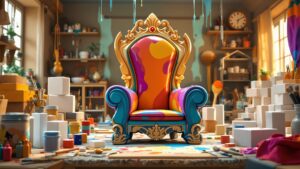
What happens when the power of royalty meets the playfulness of animation? You get the cartoon-inspired throne — a chair that looks like it stepped straight out of a sketchbook and into real life. These imaginative seats mix storytelling, color, and exaggeration to create something far beyond furniture. They are visual joyrides: part sculpture, part set piece, and all attitude. In the past few years, cartoon-inspired thrones have exploded across events, film sets, themed restaurants, art installations, and photo-ready pop-ups. They capture that perfect blend of nostalgia and spectacle — something instantly recognizable yet freshly whimsical. Whether they mimic the look of a beloved animated series or simply take inspiration from the bold style of cartoons in general, these thrones let people sit inside a story.
How Cartoons Became Design Blueprints
Cartoons have always exaggerated the world — bigger eyes, brighter colors, impossible physics. When those same principles are applied to furniture, the results are magical. Designers and fabricators reinterpret the bold lines, simplified shapes, and saturated hues of animation into physical form. It’s not about copying a show or character frame for frame. Instead, a cartoon-inspired throne captures the feeling of animation — the wonder, humor, and boldness. A chair might have oversized proportions that make its sitter look like they’ve entered a world where everything’s drawn by hand. The edges may appear outlined in black, as if the seat itself was inked into existence. Artists often begin by studying animated worlds — how color palettes create emotion, how shadows and highlights define form, and how exaggerated geometry tells personality. A “cartoon throne” becomes a hybrid of functional furniture and visual illusion, bringing 2D imagination into the 3D world.
Why Cartoon Thrones Capture Hearts
Cartoon-inspired thrones speak directly to our inner child. They remind us of a time when sitting on a pillow fortress could make us rulers of imaginary kingdoms. That sense of play hasn’t gone away; it’s simply found new materials.
These thrones also tap into pop culture’s universal language. Animation transcends borders — from Disney classics and Looney Tunes to anime epics and Saturday morning nostalgia. A cartoon-inspired throne can feel familiar to everyone, yet unique in its design. At events, they’re instant conversation starters. People can’t resist sitting in a throne that looks like it was pulled from a Saturday morning fantasy. They’re photogenic, shareable, and emotionally irresistible. Every bright color and exaggerated curve says, “Have fun!” — and in a world often too serious, that’s powerful design psychology.
The Style Spectrum: From Whimsical to Wild
Cartoon-inspired thrones can range from cute and colorful to darkly satirical. The style depends on the story being told. Some are soft and round, echoing the bubbly worlds of family-friendly cartoons. Think candy-colored cushions, spiral-leg posts, and frames that look inflated or playfully squishy.
Others lean into bold, angular exaggeration, capturing the comic-book energy of superhero universes — hard edges, metallic accents, and dramatic lighting. Then there are the surreal and satirical versions, inspired by adult animation and fantasy parodies. These might incorporate wilder forms — melting structures, unexpected patterns, or asymmetrical crowns that seem to defy gravity.
The unifying theme? Character. A cartoon throne doesn’t just exist; it performs. It exudes a personality all its own.
The Psychology of Playful Power
There’s a subtle genius in how cartoon-inspired thrones balance humor and authority. While traditional royal thrones evoke reverence, cartoon thrones invite delight. They give people permission to feel important and ridiculous at the same time — and that’s what makes them special. Design psychologists have long noted how color and shape influence emotion. Round forms feel friendly; angular ones feel strong. Bright yellows spark energy, while pastel pinks soften mood. By combining these visual cues with the grand silhouette of a throne, artists create seats that are both empowering and disarming. The result is a piece that doesn’t just decorate a space — it transforms it. A cartoon throne becomes a magnet for joy and imagination.
Thrones Inspired by Animated Icons
Many cartoon-inspired thrones pay homage to animation’s royal lineage. Imagine a neon-purple seat shaped like Ursula’s shell throne from The Little Mermaid, or a stone-textured chair modeled after The Lion King’s Pride Rock. A throne inspired by a comic villain might feature angular horns and metallic reds, while a princess-style version could glow in pastel gradients and glittered detail.
Animation’s history is filled with throne imagery — from the Evil Queen’s mirror-backed seat to fantasy kings and intergalactic rulers. Each of these influences offers designers a library of ideas to remix. Modern creators often design “fusion thrones,” blending aesthetics from multiple worlds: a seat that merges fairy-tale curves with futuristic cartoon chrome; or a pop-art throne with speech-bubble arms and a comic-book halftone texture. The fusion creates a visual paradox — part royal, part ridiculous, fully unforgettable.
Throne Rooms of Imagination: Where You’ll Find Them
Cartoon-inspired thrones have become staples at places where creativity meets experience.
- At events and expos, they serve as show-stopping photo opportunities. Fans at comic conventions line up to sit in thrones inspired by their favorite animated worlds. The seat becomes an attraction, a moment of participation in fandom itself.
- In theme parks and entertainment venues, cartoon thrones often mark entrances to character zones or immersive dining areas. A chair shaped like a smiling castle or a candy crown becomes a symbol of welcome and wonder.
- In retail and marketing activations, brands use cartoon-style thrones to connect playfulness with identity. A cosmetics company might create a pastel fantasy throne for selfies, while a gaming brand designs an angular, animated “power chair” to celebrate a new release.
- In private collections and creative offices, cartoon thrones serve as centerpieces — symbols of imagination, humor, and originality. They make statements: “This is not a typical space. This is where creativity rules.”
The Design DNA of a Cartoon Throne
Cartoon-inspired thrones follow design rules quite unlike those of ordinary furniture. The first principle is exaggeration. The backrest might curve twice as high as a normal chair, or the arms might swirl outward like ribbons. The second is color storytelling. Bright primaries, pastel gradients, and sharply defined contrasts are key. Designers think like animators — using hue to express mood. The third is texture illusion. Some thrones are built to look like they’re made of rubber, jelly, or drawn outlines. Scenic artists use paint effects, coatings, and strategic lighting to achieve the illusion of two-dimensionality. And the final principle is emotion. Every throne aims to evoke a feeling: laughter, awe, nostalgia, or surprise. The design succeeds when people smile before they even sit down.
How Cartoon-Inspired Thrones Are Fabricated
The making of a cartoon throne blends advanced fabrication with pure artistry. Each one starts not in a woodshop, but in a sketchbook — sometimes even on a tablet screen where designers digitally paint concept art that looks straight out of an animation cel. Once the design is approved, the fabrication process begins.
Step 1. Structure and Scaling
The throne’s frame is built from durable materials such as wood, steel tubing, or high-density EPS foam, depending on whether it’s meant for permanent display or event mobility. For cartoon-style builds, fabricators often enlarge proportions slightly beyond realistic dimensions to enhance that playful, “larger-than-life” feel without making it impractical.
Step 2. Shaping and Sculpting
Foam or CNC-cut components are shaped into exaggerated forms — curving scrolls, rounded arms, and whimsical crowns. Fabricators use sanders, hot wires, or digital carving machines to achieve smooth, flowing contours that mimic hand-drawn animation.
Step 3. Coating and Reinforcement
Once shaped, the foam is sealed and coated with polyurea, fiberglass, or epoxy resin. This step gives the throne its durability and smooth cartoon-gloss surface. Reinforcement rods or internal bracing ensure that the exaggerated features stay sturdy during use and transport.
Step 4. Surface Painting and Detailing
Here’s where the magic happens. Scenic artists paint with bold, saturated colors — often layering matte and gloss finishes to create optical contrast. Some add cell-shading effects: thick black outlines or gradient shadows that make the throne appear as if it’s been drawn into the room. Textures may be airbrushed, hand-painted, or digitally projected for precision. Glitter, iridescent coatings, or LED accents can be integrated to enhance vibrancy.
Step 5. Upholstery and Comfort
The seat itself remains functional. Cushions are built with foam padding and covered in fabrics chosen to complement the visual theme — plush velvets, vinyls, or printed textiles that look animated. Stitching may intentionally echo cartoon outlines or comic-book halftones for authenticity.
Step 6. Assembly and Installation
Once components are finished, the throne is assembled, polished, and tested. For installations, modular construction allows easy transport. Lighting cues and stage design may complete the illusion, turning the throne into a focal point that feels lifted from an animated world.
The end result? A handcrafted work of art that blends sculpture, paint, and performance design — a throne where imagination quite literally sits down.
The Materials That Make the Magic
Behind every cartoon-inspired throne is a mix of clever material engineering and visual artistry.
- Foam (EPS or XPS) forms the sculptural base — lightweight and easily shaped into exaggerated contours. Once sealed and coated, it can mimic anything from polished plastic to shiny enamel.
- Fiberglass and polyurea coatings provide strength and that signature smooth surface reminiscent of animation cel gloss.
- Wood and metal frameworks keep everything stable and secure. Even whimsical shapes need engineering precision, especially for thrones used in high-traffic events.
- Paint and coatings do the heavy visual lifting. Artists mix acrylics, urethanes, and specialty automotive paints to achieve that saturated cartoon glow. Finishes may include pearlescence or UV-reactive pigments for environments with theatrical lighting.
- Fabric and padding bring comfort and warmth, grounding the fantasy in physical usability. Designers often use vibrant upholstery or digitally printed textiles with graphic motifs to enhance the “animated” look.
The combination of these materials transforms whimsy into reality, letting people interact with something that feels straight out of a cartoon dimension.
The Art of Scale and Balance
Cartoon-inspired thrones may look spontaneous, but behind every playful curve lies careful design logic. Artists understand how scale manipulates emotion. A slightly oversized backrest makes the sitter appear small and playful, while wider arms exaggerate perspective. At the same time, balance matters. Too much exaggeration and the throne becomes impractical; too little and the magic fades. Skilled designers fine-tune proportions so that every detail — from seat height to curvature — feels intentionally animated but ergonomically grounded. Lighting also plays a role. Bright directional light helps emphasize bold shadows and shapes, mimicking the high-contrast style of classic cartoons. This is why many cartoon thrones shine best in photo studios or themed event spaces — environments where visual storytelling comes alive.
The Throne as Pop Art
In many ways, cartoon-inspired thrones blur the line between furniture and pop art. They don’t just exist for function; they exist to provoke delight and conversation. Artists have begun displaying cartoon thrones in galleries and museums as commentary on culture, nostalgia, and design. These installations celebrate animation not as escapism, but as an aesthetic philosophy — proof that joy and sophistication can coexist.
Just as Andy Warhol turned soup cans into icons, the cartoon throne turns the humble chair into a visual manifesto: play is powerful. In offices, restaurants, and studios, these thrones also serve as creative anchors — a place where inspiration literally sits. They remind everyone that good design can be both professional and playful, regal and ridiculous.
From Animation Studios to Weddings
Cartoon-inspired thrones aren’t limited to exhibitions. They’ve found homes in wildly diverse settings. Animation studios display them in lobbies as symbols of creativity. Kids’ museums and family parks use them as interactive installations that invite participation. Event planners love cartoon thrones for themed parties and brand activations — from princess birthdays to comic-book launches. The thrones become instant photo magnets, amplifying social media buzz.
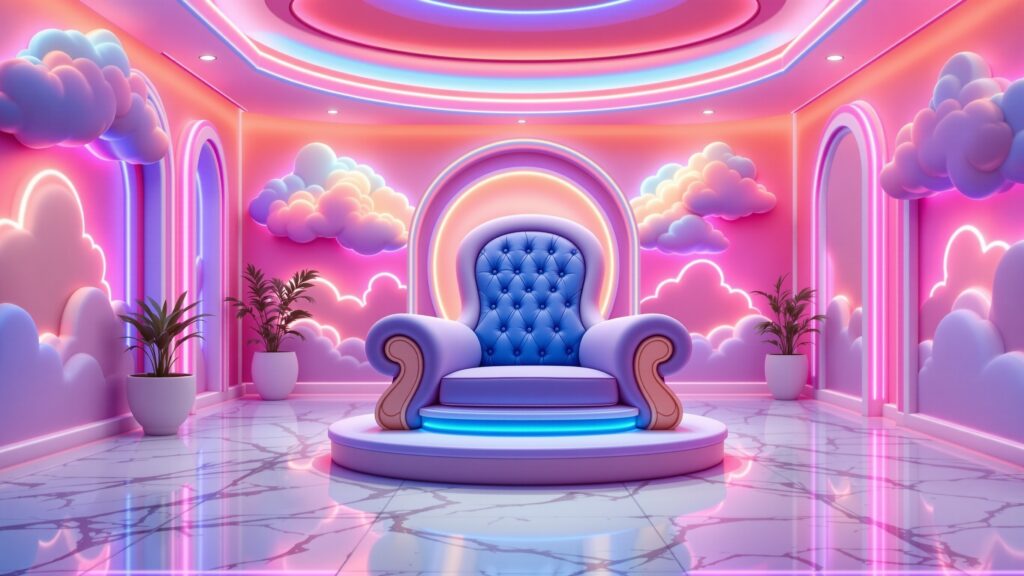
Even weddings have embraced them, especially couples seeking a fairytale or pop-art aesthetic. A pastel-pink throne with cloud-like curves can turn a bridal stage into a dreamscape, while a neon-lined seat might headline a modern reception entrance. The versatility of cartoon-style design makes these thrones adaptable to nearly any theme that values fun, fantasy, and visual impact.
The Future of Cartoon-Inspired Thrones
As digital design and fabrication technology evolve, cartoon-inspired thrones are entering a new era. Designers are using 3D modeling software to pre-visualize exaggerated geometry and apply animated textures directly to digital prototypes.
New materials are making builds lighter, stronger, and more sustainable. Bio-based foams, recycled plastics, and water-based coatings reduce environmental impact without compromising the look. Lighting and interactivity are also advancing. Some thrones now integrate LED outlines that pulse or glow, replicating the aesthetic of motion lines or energy bursts. Others use projection mapping to animate the surface — turning a static chair into a living piece of storytelling.
Augmented reality adds yet another layer. Visitors can scan a QR code and see animated effects appear around the throne through their phones — cartoon sparkles, sound effects, or moving shadows that complete the illusion. In short, the cartoon throne is evolving from a static sculpture into a multi-sensory experience — a new hybrid of art, furniture, and technology.
Why Cartoon Thrones Matter
Cartoon-inspired thrones might seem like novelty items, but they represent something profound about design: the power to turn imagination into reality. They remind us that creativity doesn’t have to be confined to screens or sketches — it can be built, painted, and touched. They also demonstrate the emotional intelligence of modern design. In a world filled with sleek minimalism, the cartoon throne celebrates maximalism, joy, and nostalgia. It reclaims color and humor as legitimate forms of artistic expression. And above all, cartoon-inspired thrones connect people. They make adults feel like kids again, and kids feel like royalty. They create moments of shared wonder — proof that design can still surprise and delight.
Where Fantasy Sits Down
Cartoon-inspired thrones prove that imagination doesn’t belong only to screens. It belongs to spaces, to people, to moments of laughter and awe. Each one is a reminder that furniture can tell stories, that craftsmanship can animate dreams, and that playfulness can coexist with artistry. From foam sculptors to scenic painters, every artisan who builds one of these thrones participates in something bigger — the transformation of fantasy into form. So the next time you see a brightly painted, larger-than-life chair that looks like it wandered out of an animated kingdom, take a seat. Let yourself grin. Because in that moment, you’re not just sitting on a throne — you’re sitting inside imagination itself.
Check out WhiteClouds’ 3D Props for more information.
Contact us today to learn more about our 3D services and how we can help you achieve your goals.