A Map for Places Where Roads Disappear
A backcountry topo map is a navigator’s lifeline in landscapes where pavement ends and uncertainty begins. It’s designed for wild, remote environments—mountain ranges, deserts, forests, tundra—where GPS signals may fail, cell service is nonexistent, and decisions carry real consequences. More than a general map, a backcountry topo map reveals the shape of the land itself, showing how terrain rises, falls, funnels water, and challenges movement. At its core, a backcountry topo map is a topographic map built specifically for wilderness travel and exploration. It uses contour lines, elevation data, and natural landmarks to help hikers, climbers, hunters, skiers, researchers, and adventurers understand the terrain before they ever set foot on it. In these settings, knowing what the land looks like ahead of time isn’t just convenient—it’s essential. Backcountry topo maps turn vast, intimidating spaces into readable environments. They help people move with confidence, plan safer routes, and respect the power of nature rather than underestimate it.

The Meaning Behind “Topo”
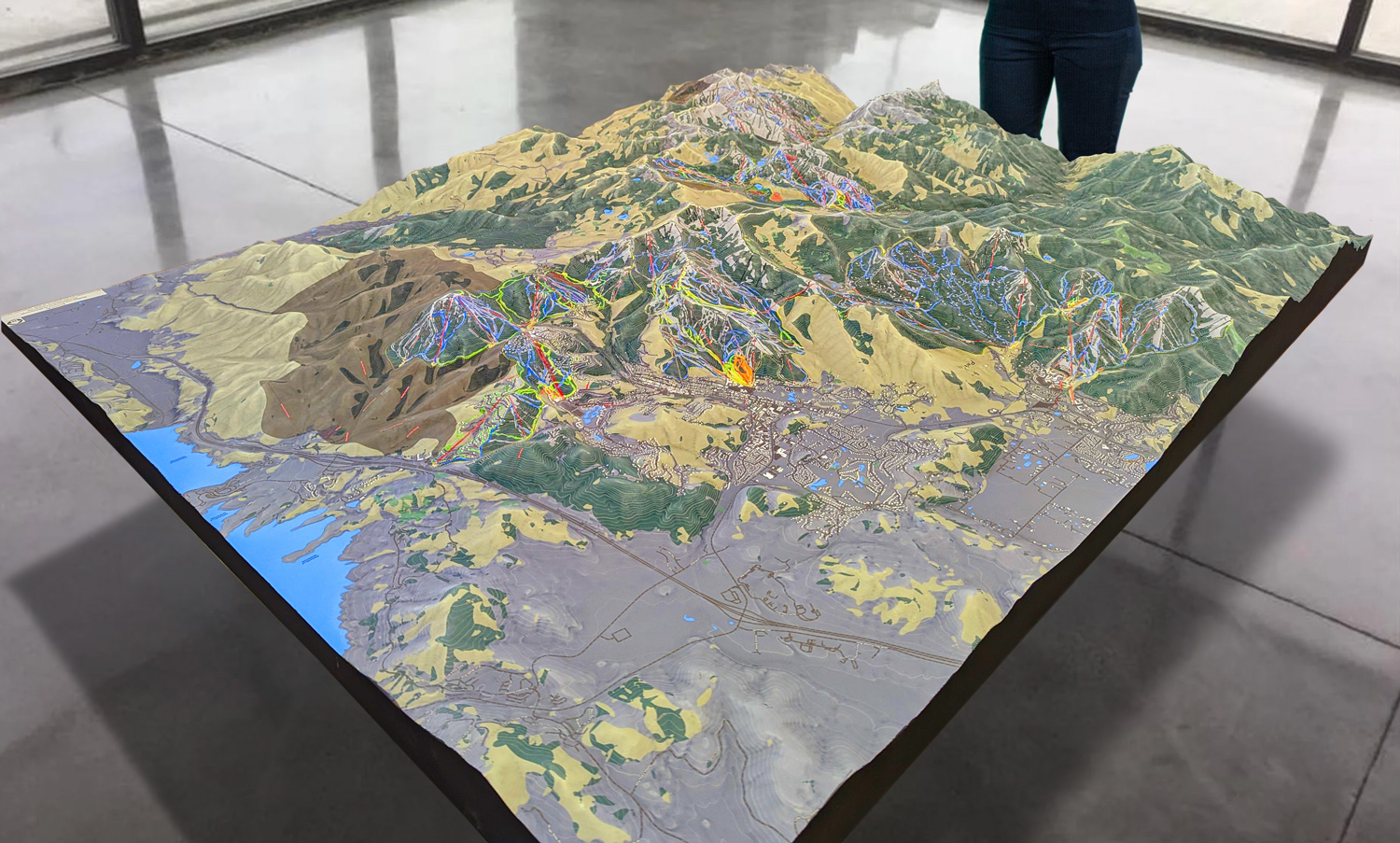
“Topo” is short for topographic, a term rooted in describing physical surface features. In a topo map, contour lines represent points of equal elevation. When those lines are close together, the land is steep. When they spread apart, the terrain is gentler. These lines form the visual language of elevation, allowing a flat sheet of paper to communicate three-dimensional reality. Backcountry topo maps rely heavily on this language because terrain is often the defining challenge in remote areas. Cliffs, ridgelines, saddles, basins, and drainages are all revealed through contour patterns. Over time, experienced map readers can glance at a topo map and instantly visualize the land as if they were already there. This ability to “see” terrain through lines is what separates topo maps from standard road or recreation maps—and why they remain indispensable in the backcountry.
How Backcountry Topo Maps Differ from Standard Maps
Unlike city maps or highway atlases, backcountry topo maps prioritize natural features over human infrastructure. Roads, buildings, and towns may appear only sparingly or not at all. Instead, the map focuses on elevation, landforms, water sources, vegetation boundaries, and trails—elements that matter most when navigating wilderness.
Standard maps are designed for speed and simplicity. Backcountry topo maps are designed for precision and awareness. They provide detailed elevation intervals, often much tighter than those used in general-purpose maps. This level of detail allows users to anticipate physical effort, identify hazards, and plan routes that match their skill level. In short, backcountry topo maps trade convenience for clarity. They assume the user is willing to engage deeply with the landscape, not just pass through it.
The Essential Elements of a Backcountry Topo Map
Every backcountry topo map shares a set of core features that make it reliable in wild terrain. Contour lines form the foundation, defining elevation and slope. Index contours—usually drawn darker—help users quickly identify major elevation changes.
Natural landmarks such as peaks, passes, ridges, valleys, lakes, rivers, and glaciers are carefully labeled and positioned. Trails, when present, are often shown as thin lines that snake through the terrain, reflecting real-world difficulty rather than convenience. Man-made structures are minimal and usually limited to shelters, ranger stations, or trailheads.
Scale and orientation are critical. Backcountry topo maps are typically produced at scales that balance detail with coverage, allowing users to understand both immediate terrain and the broader region. North arrows, grid systems, and coordinate references support precise navigation when visibility is limited.
Why Elevation Matters in the Backcountry
In wilderness travel, elevation influences everything. It affects weather, temperature, vegetation, water availability, and physical exertion. A backcountry topo map helps users understand not just where they are going, but what kind of environment they will encounter along the way.
Climbing a thousand feet over a short horizontal distance is very different from gaining that elevation gradually over miles. Contour spacing reveals this instantly. High points may offer visibility but expose travelers to wind and storms. Low points may provide shelter but increase the risk of flooding or difficult travel through dense vegetation. By visualizing elevation in advance, backcountry topo maps help adventurers make smarter decisions that align with conditions, experience, and goals.
Reading the Landscape Through Contour Lines
Learning to read contour lines is like learning a new language, but once mastered, it becomes second nature. Closed loops often indicate hills or peaks, with the smallest loops marking the highest points. V-shaped contours point uphill when crossing streams or drainages, revealing the direction water flows. Ridges appear as elongated high areas with contours forming U-shapes pointing downhill. Saddles—low points between higher terrain—are visible where contours dip gently between peaks. These features are critical for route planning, especially when seeking the safest or most efficient path through complex terrain. Backcountry topo maps reward careful observation. The more time spent studying them, the more the land reveals itself.
Backcountry Navigation Without Technology
One of the greatest strengths of a backcountry topo map is its independence from technology. Batteries die. Screens break. Signals vanish. A printed topo map remains reliable in rain, cold, heat, and isolation.
For many backcountry travelers, topo maps are paired with a compass to provide precise navigation even in whiteout conditions or dense forest. Together, they allow users to orient themselves, follow bearings, and confirm position using terrain features.
This self-reliance is a major reason topo maps are still taught in outdoor education and survival training. They empower people to move confidently without relying on fragile systems.
Digital Backcountry Topo Maps
While paper maps remain essential, digital backcountry topo maps have expanded access and convenience. GPS-enabled topo apps allow users to view their position in real time over detailed elevation data. Layers can be toggled to show slope angle, satellite imagery, or land management boundaries.
Digital topo maps are especially useful for pre-trip planning. Routes can be drawn, elevation profiles analyzed, and distance calculated before ever stepping outside. Many adventurers now use a hybrid approach, combining digital tools with printed maps for redundancy. Even in digital form, the principles of backcountry topo mapping remain unchanged. The technology enhances access, but the terrain still demands respect and understanding.
Backcountry Topo Maps and Route Planning
Planning a route in the backcountry is part art, part science. A topo map provides the raw information needed to balance efficiency, safety, and enjoyment. Steep slopes can be avoided or embraced depending on skill level. Natural corridors such as ridgelines or valleys can be identified and followed. Water sources are another critical planning element. Streams, lakes, and springs shown on topo maps help determine campsite locations and resupply points. In arid environments, these details can be life-saving. By studying a backcountry topo map, travelers can anticipate challenges rather than react to them, turning uncertainty into informed decision-making.
Seasonal Considerations on Backcountry Topo Maps
Terrain doesn’t change with the seasons, but how it behaves does. A slope that’s manageable in summer may become dangerous under snow. A dry creek bed may transform into a raging torrent during spring melt.
Backcountry topo maps help users anticipate these seasonal changes by showing slope angles, drainage patterns, and exposure. Skiers, snowshoers, and mountaineers rely on topo maps to assess avalanche terrain and identify safer travel routes.
Understanding how the same terrain behaves differently throughout the year is one of the most valuable skills a topo map can help develop.
Backcountry Topo Maps in Conservation and Research
Beyond recreation, backcountry topo maps play an important role in conservation and scientific research. Ecologists use them to study habitat distribution and wildlife movement. Geologists analyze landforms and erosion patterns. Land managers rely on topo maps to plan trails, protect sensitive areas, and respond to emergencies.
In these contexts, topo maps support long-term stewardship of wild places. They help balance human access with environmental protection, ensuring that backcountry areas remain healthy and resilient.
Common Misconceptions About Backcountry Topo Maps
A common misconception is that topo maps are only for experts. While they do require learning, they are accessible to anyone willing to practice. Another misunderstanding is assuming that topo maps guarantee safety. They provide information, not protection. Judgment and experience remain essential. Some users also assume digital maps eliminate the need for paper. In reality, redundancy is key in remote environments. Backcountry topo maps are most effective when used thoughtfully and in combination with other skills.
Learning to Trust the Map
Trust in a backcountry topo map grows with experience. As travelers compare the map to the terrain around them, patterns begin to align. A ridge on the map becomes the ridge underfoot. A saddle reveals itself exactly where expected.
This alignment builds confidence and deepens connection to the landscape. The map becomes more than a tool—it becomes a companion that guides and informs without distraction.
Scale and Detail in Backcountry Topo Maps
Scale determines how much detail a topo map can show. Larger-scale maps focus on smaller areas with greater detail, ideal for technical terrain or complex routes. Smaller-scale maps cover broader regions but sacrifice fine detail. Choosing the right scale depends on the trip. Multi-day expeditions may require multiple maps at different scales to balance overview and precision. Understanding scale helps users avoid surprises and navigate more effectively.
The Enduring Value of Backcountry Topo Maps
In an age of instant information, backcountry topo maps remain deliberately slow. They ask users to pause, study, and think. This process fosters awareness and respect for the land.
By translating raw terrain into readable form, topo maps help people move through wild places with intention rather than impulse. They remind us that the backcountry is not something to conquer, but something to understand.
Why Backcountry Topo Maps Still Matter
Backcountry topo maps endure because they do something no other tool can do as well: they teach us how to read the land. They transform wilderness from an unknown into a knowable, navigable space without diminishing its mystery. For anyone who ventures beyond the trailhead, a backcountry topo map is more than a reference—it’s a foundation for safe exploration, informed decisions, and deeper connection to the natural world.