
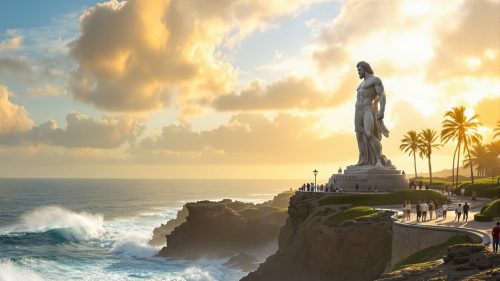
How Sculpted Giants Turn Cities into Icons of Wonder
Every great city has its silent storytellers—statues that rise from plazas, parks, and coastlines to capture imagination and camera lenses alike. These aren’t just works of art; they’re magnets. Tourists flock to them, photographers worship them, and entire economies quietly orbit their presence. From colossal deities gazing over jungles to sleek modern figures illuminating city skylines, statues for tourist attractions have become the universal language of identity. They tell travelers, “You’ve arrived somewhere extraordinary.” Whether they celebrate history, myth, or modernity, these monuments transform geography into emotion. Statues are not just landmarks—they’re landmarks with a heartbeat. Let’s explore how they evolved, why they attract millions, and how artisans and engineers bring these towering symbols from imagination to reality.
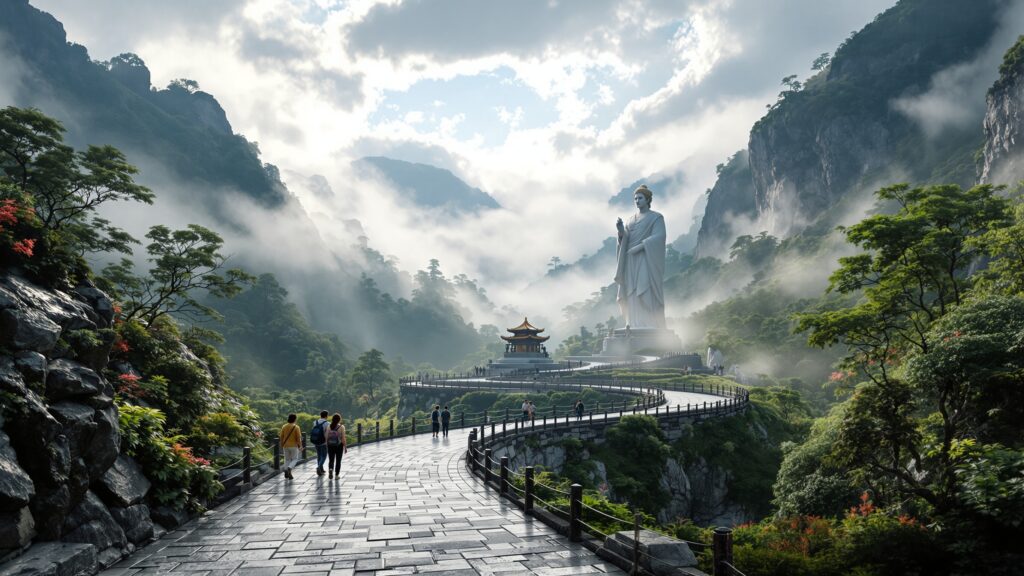
Why Statues Draw the World In
Tourism thrives on experience, and statues deliver it in an instant. They merge artistry, culture, and narrative into one tangible form that can be seen, touched, and photographed. A painting stays inside a museum. A statue lives outdoors, in the wind and light, surrounded by human life. When travelers visit Rio de Janeiro’s Christ the Redeemer, New York’s Statue of Liberty, or Copenhagen’s Little Mermaid, they’re not just admiring sculpture—they’re connecting with meaning. These monuments distill complex histories into single, unforgettable visuals. They are emotional shorthand for place and pride. Statues also play to the human instinct for scale. When we stand beneath something far larger than ourselves, we feel awe—a primal mix of reverence and curiosity that’s perfect fuel for tourism. Add storytelling, lighting, and the power of social media, and you’ve got a global attraction that markets itself.
A Brief History of Statues as Destinations
The idea of statues as tourist attractions isn’t new—it’s as old as civilization itself. Ancient travelers crossed seas to marvel at the Colossus of Rhodes, one of the Seven Wonders of the World. Pilgrims trekked for miles to glimpse sacred idols or temple guardians in Egypt, Greece, and India.
By the Renaissance, statues were synonymous with civic pride. Italian city-states like Florence and Venice installed public masterpieces to showcase wealth and culture. Michelangelo’s David didn’t just celebrate the biblical hero—it signaled the artistic dominance of Florence.
In modern times, the trend accelerated. Governments, cities, and private developers realized statues could be powerful economic engines. Landmarks like the Spring Temple Buddha in China or the Angel of the North in England draw millions annually. Each new statue is both a cultural investment and a tourism strategy. From ancient gods to selfie backdrops, statues have evolved into a global language of attraction—one that keeps getting louder and taller.
The Power of Symbolism: Sculpting Identity
Every great tourist statue tells a story. The material might be bronze, stone, or steel, but what it represents is far more potent—belief, resilience, unity, freedom. A city’s chosen statue becomes its shorthand for identity. Paris has the Eiffel Tower; New York has Lady Liberty; Rio has its Redeemer. These aren’t just structures—they’re visual metaphors woven into national DNA.
Modern cities follow suit with contemporary symbols that speak to current values. Environmental awareness inspires sculptures made from recycled materials. Social progress sparks monuments celebrating diversity and empowerment. Futuristic cities commission kinetic or light-responsive statues to signal innovation. The secret lies in universality. The more a statue communicates something everyone can feel—hope, love, strength—the more magnetic it becomes.
The Tourism Ripple Effect
A single iconic statue can transform an entire region’s economy. Studies show that landmarks often increase local tourism revenue by double digits, boosting hotels, restaurants, and transportation.
Take the Statue of Unity in India—a 597-foot tribute to statesman Sardar Vallabhbhai Patel. It draws more than two million visitors annually, revitalizing Gujarat’s tourism infrastructure and generating thousands of jobs. Similarly, Japan’s Ushiku Daibutsu, towering over 390 feet, anchors a surrounding park and museum complex that attracts pilgrims and international travelers alike.
Smaller destinations also harness statues to create identity. In Reykjavik, the Sun Voyager sculpture turned a waterfront stretch into Iceland’s most photographed spot. In Chicago, Cloud Gate (“The Bean”) became a modern pilgrimage site for art lovers and Instagram explorers. The statue becomes a gravitational center—a nucleus that organizes culture, commerce, and curiosity around itself.
Designing for Wonder: The Art of Attraction
Creating a statue that draws crowds requires more than artistry—it demands psychology. Designers must consider not just how a statue looks, but how it feels to approach.
Scale is key. Monuments command attention when they play with proportion, dwarfing the viewer without overwhelming them. Position matters too: statues placed on hills, cliffs, or open plazas maximize visibility and drama.
Color, texture, and posture all evoke emotion. Upward-reaching forms symbolize aspiration. Open arms suggest welcome. Reflective surfaces invite interaction and selfies. Even the direction a statue faces can shape its narrative—sunrise for hope, sunset for peace.
Many designers integrate landscape into the sculpture itself. Surrounding gardens, walkways, or water features transform a simple monument into a full sensory experience. The visitor doesn’t just see the statue—they enter its world.
Fabrication Spotlight: How Tourist Statues Are Built
Behind every monumental statue lies a monumental process—a blend of digital design, heavy engineering, and delicate artistry. It begins with concept modeling. Artists and architects collaborate on 3D digital renderings that define posture, surface detail, and environmental context. Once approved, engineers step in to calculate internal structure, stress loads, and wind resistance—vital for statues that might face decades of storms.
For large tourist attractions, statues are often fabricated in modular sections. These are cast, welded, or molded separately, then transported to the site for assembly. Materials vary:
- Fiberglass and resin for lightweight, detailed surfaces.
- Bronze or stainless steel for durability and shine.
- Concrete or stone composites for monumental permanence.
The surface is often textured by hand, giving even industrial-scale sculptures a human touch. Once construction is complete, painters or metal finishers apply protective coatings—color, patina, or mirror polish—before the final clear sealant. Installation is an engineering ballet. Cranes hoist each section into place, welders fuse seams, and specialists conduct stress tests. The unveiling often becomes a civic celebration—because what’s being revealed isn’t just a statue, but a new chapter of place identity.
The Role of Technology in Modern Statue Making
Technology has revolutionized how tourist statues are conceived and fabricated. 3D scanning and CNC milling allow sculptors to scale up small maquettes into full-size models with millimeter precision. Robotic carving arms now shape marble, foam, and metal at speeds impossible for human hands alone.
Augmented reality is entering the scene too. Some modern tourist attractions incorporate AR overlays, letting visitors view historical reconstructions or animated effects through smartphones. Imagine pointing your phone at a statue and watching its digital “soul” come alive with light, music, or storytelling.
Lighting design has also become crucial. Programmable LEDs and projection mapping allow statues to change color, display patterns, or host light shows that turn ordinary evenings into events. The result? Nighttime tourism that’s as vibrant as daytime sightseeing.
Technology doesn’t replace craftsmanship—it expands it, transforming statues from static symbols into dynamic experiences.
The Emotional Architecture of a Great Statue
Every statue has an invisible blueprint: its emotional architecture. The most successful tourist statues don’t just stand—they speak.
Artists often describe designing emotion the same way architects design space. The goal isn’t to replicate a person or object but to capture an energy. The Fearless Girl statue in New York radiates courage without motion. The Thinker in Paris evokes contemplation with simple posture.
For large tourist attractions, emotion becomes amplified. A towering Buddha communicates serenity at planetary scale. A futuristic abstract shape might evoke ambition or progress. Visitors feel these emotions instinctively, which is why statues remain timeless even as trends change. Great tourist art is not just seen—it’s felt in the bones.
Building an Experience Around the Statue
A statue alone can attract a visitor; a statue plus experience keeps them there. Successful attractions weave the monument into a larger ecosystem of discovery. Surrounding plazas may feature interpretive exhibits, guided tours, souvenir kiosks, or immersive lighting and sound installations. Viewing decks or cafes positioned near the statue turn admiration into relaxation. Museums and educational centers nearby add context, telling the story of how and why the monument was built.
Even digital engagement matters. Hashtags, virtual tours, and AR storytelling extend the statue’s reach far beyond its physical site. The modern tourist attraction isn’t limited by geography—it’s shared across millions of screens in real time. In essence, the statue is the centerpiece of a much larger choreography of experience—one that invites travelers to participate, not just observe.
The Economics of Awe
Statues aren’t cheap, but their returns can be monumental. A large-scale public sculpture can cost anywhere from a few hundred thousand dollars to hundreds of millions, depending on size, materials, and engineering. But when designed strategically, the return on investment is staggering.
Cities report revenue spikes from visitor spending, new infrastructure, and brand recognition. A landmark statue instantly elevates a destination’s global visibility. It appears on postcards, travel guides, movies, and Instagram feeds—free advertising worth millions.
The Christ the Redeemer generates continuous revenue through tourism and licensing, while Cloud Gate turned Chicago’s Millennium Park into one of America’s most profitable cultural destinations. The key isn’t the statue itself—it’s the ecosystem of storytelling, marketing, and experience built around it. In the age of digital wanderlust, a single photogenic monument can sustain an entire tourism economy.
Sustainability and Responsibility in Monument Design
As the world becomes more eco-conscious, the next generation of tourist statues is being built with sustainability in mind. Recycled metals, eco-friendly resins, and low-carbon concrete are replacing traditional materials. Solar lighting and energy-efficient maintenance systems ensure long-term operation with minimal environmental impact. Some projects even use art as activism. Statues crafted from ocean plastic raise awareness about marine conservation. Others incorporate living plants or moss-covered surfaces, symbolizing harmony between human creativity and nature. Tourist art no longer just draws visitors—it educates them. Each new statue can become both a beacon of beauty and a call to stewardship.
Fabrication Meets Storytelling: From Concept to Landmark
Fabricating statues for tourist attractions isn’t only about structure—it’s about storytelling at scale. The process begins with a narrative. Artists and city planners define the core message—heritage, hope, innovation, or unity. Designers translate that story into form: the curve of an arm, the tilt of a head, the play of light across a surface. Engineers ensure the design can stand safely for decades. Once the blueprint is set, fabrication becomes theater. Workshops buzz with sculptors shaping foam molds or metal skeletons. Painters test color swatches under outdoor light. Every weld, every brushstroke, serves the greater narrative. When the statue finally rises in its destination, the story becomes communal. Locals adopt it as their symbol; travelers share it as their memory. The act of fabrication ends, but the act of storytelling never does.
Statues as Modern Pilgrimage
In ancient times, pilgrims journeyed to sacred statues for spiritual renewal. Today’s tourists make similar pilgrimages—seeking connection, meaning, and awe in a secular age. There’s something deeply human about traveling to see a great monument in person. Photographs can’t capture the feeling of standing before a giant, gazing upward, feeling small yet inspired. It’s a moment that fuses personal experience with collective history.
That’s why new statues continue to be commissioned across the world—from Africa’s Renaissance Monument in Senegal to The Motherland Calls in Russia. Each new figure adds a new destination to humanity’s map of meaning. Tourism built around statues is ultimately tourism built around emotion—and that emotion never goes out of style.
The Future of Tourist Statues: Smart, Immersive, Alive
The next frontier of statue-based attractions is interactivity.
Imagine walking up to a monument that responds to presence—lighting up as visitors approach, or projecting multilingual greetings. Sensors could track movement and trigger soundscapes or digital displays.
AI-driven statues might tell stories, answer questions, or change color based on time of day or visitor mood. Holographic projections could accompany physical sculptures, merging reality and illusion.
Even transportation hubs, like airports and train stations, are adopting these “smart monuments” as emotional waypoints—art that both orients and enchants.
Tomorrow’s tourist statue won’t just be something to look at—it will be something to engage with.
Where Memory Meets Monument
From the marble gods of antiquity to today’s kinetic marvels of glass and steel, statues remain our most enduring invitation to wonder. They turn cities into open-air museums and ordinary landscapes into global destinations. When art meets engineering, and when vision meets storytelling, a statue becomes more than structure—it becomes symbol. It anchors identity, drives tourism, and creates memories that last generations. For travelers, these monuments are milestones. For cities, they’re investments in beauty, pride, and belonging. And for humanity, they’re proof that even in an age of screens and pixels, we still long to stand before greatness and feel small in the best possible way.
Check out WhiteClouds’ 3D Statues for more information.
Contact us today to learn more about our 3D services and how we can help you achieve your goals.